
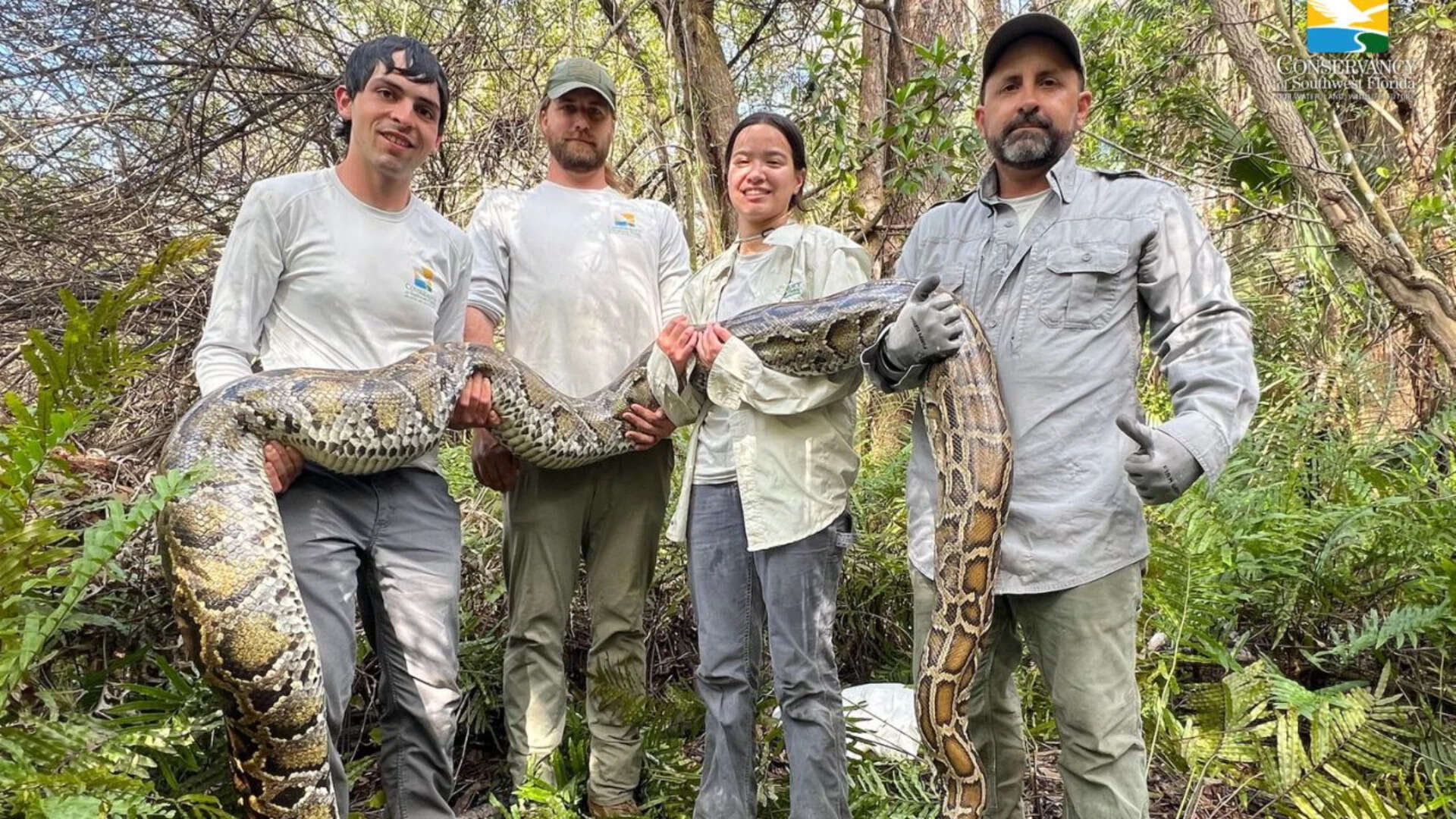
In Florida, scientists discovered that captive female pythons failed to attract wild males. Utilizing artificial intelligence, researchers sifted through millions of camera images, revealing few python sightings. Additionally, attempts to use mammalian scent lures for detecting the invasive Burmese pythons proved futile. However, there is optimism as removal strategies in the Everglades are progressing, bolstered by hunting and radio tracking initiatives aimed at controlling the invasive species population. In Florida, scientists discovered that captive female pythons failed to attract wild males. Utilizing artificial intelligence, researchers sifted through millions of camera images, revealing few python sightings. Additionally, attempts to use mammalian scent lures for detecting the invasive Burmese pythons proved futile. However, there is optimism as removal strategies in the Everglades are progressing, bolstered by hunting and radio tracking initiatives aimed at controlling the invasive species population.
Trending
- America’s deepest man-made lakes were created by flooding ancient river valleys behind massive dams; here’s the list
- 17 metro stations in Delhi to remain closed tomorrow starting 7.30am; check list
- Iran flew IRGC commanders, missile gear to Yemen’s Houthis: Report
- Pakistani man to be deported out of US for immigration fraud; used three names to become a citizen in 2009
- ‘Committed jihadist’: UK-born Pakistani man jailed over military base terror plot
- 16-yr-old Canadian student built AI robot turtle that hunts plastic invisible to eye
- Scientists tested pet-store ‘superworms’ on animal specimens and found the beetle…
- 400 Pakistani handles revived from Op Sindoor target NEET protests, being blocked: Delhi Police

Florida’s python hunt used 3M camera photos and found only four snakes
 By
By

Add A Comment