
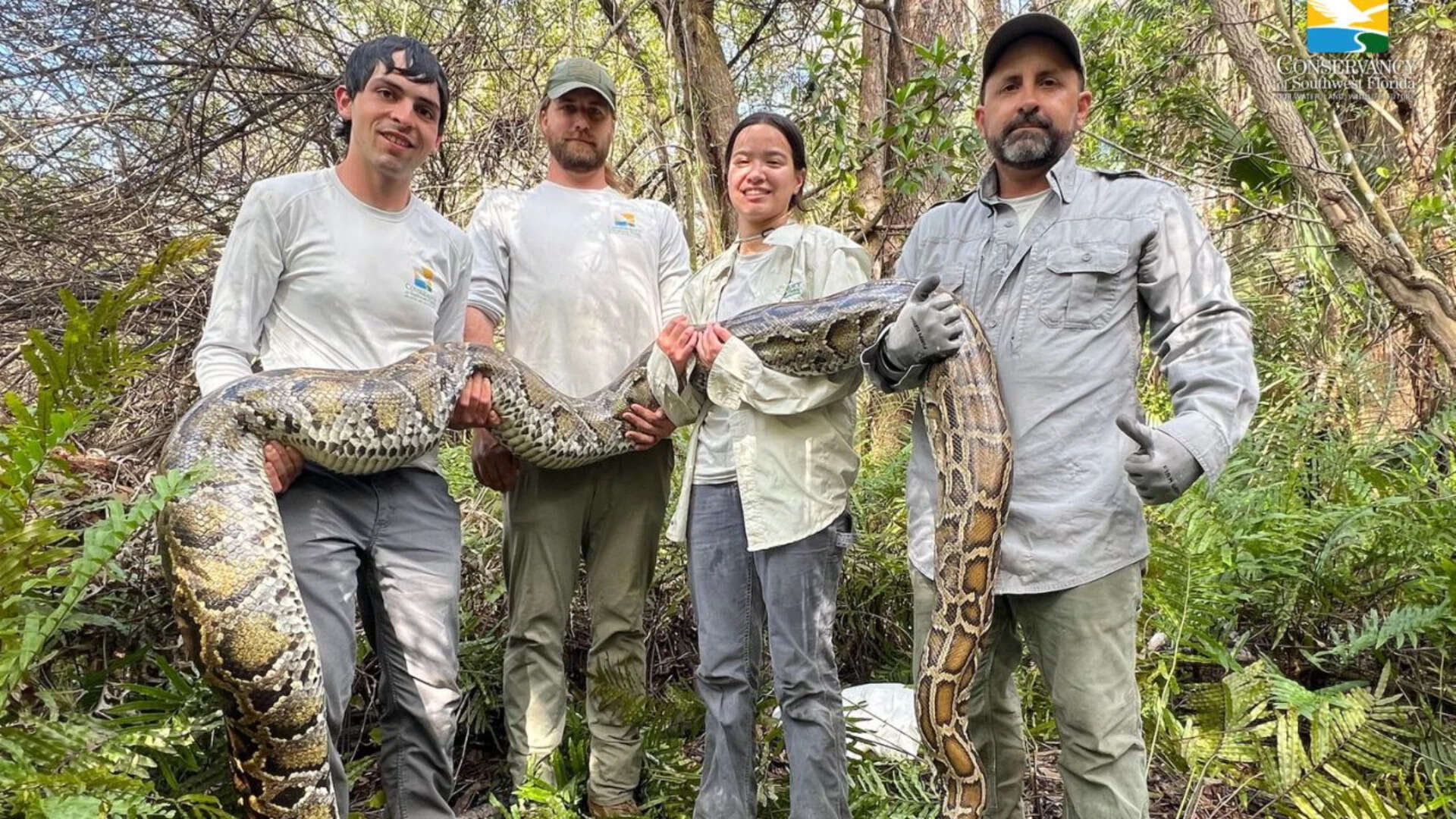
In Florida, scientists discovered that captive female pythons failed to attract wild males. Utilizing artificial intelligence, researchers sifted through millions of camera images, revealing few python sightings. Additionally, attempts to use mammalian scent lures for detecting the invasive Burmese pythons proved futile. However, there is optimism as removal strategies in the Everglades are progressing, bolstered by hunting and radio tracking initiatives aimed at controlling the invasive species population. In Florida, scientists discovered that captive female pythons failed to attract wild males. Utilizing artificial intelligence, researchers sifted through millions of camera images, revealing few python sightings. Additionally, attempts to use mammalian scent lures for detecting the invasive Burmese pythons proved futile. However, there is optimism as removal strategies in the Everglades are progressing, bolstered by hunting and radio tracking initiatives aimed at controlling the invasive species population.
Trending
- NFL schedule 2026: Full Eagles, Chiefs, Cowboys and all 32 team schedules
- Oil’s $100 comeback: Brent hits a three-month high as Red Sea tensions escalate
- UK PM Andy Burnham announces 20% business rates cut for pubs, clubs across England
- Scientists drill 33 feet into a vanishing glacier to recover a 2,000-year old record of…
- Chile community beats drought by restoring forests, soil and watershed
- ‘He is fearless’: Shreyas hails Sooryavanshi after record-breaking blitz vs Zimbabwe
- 50-year-old ‘machine problem’ is why The Odyssey can be seen in true IMAX at 41 theatres
- Burnham approves US use of UK bases for defensive strikes on Iran: Report

Florida’s python hunt used 3M camera photos and found only four snakes
 By
By

Add A Comment