





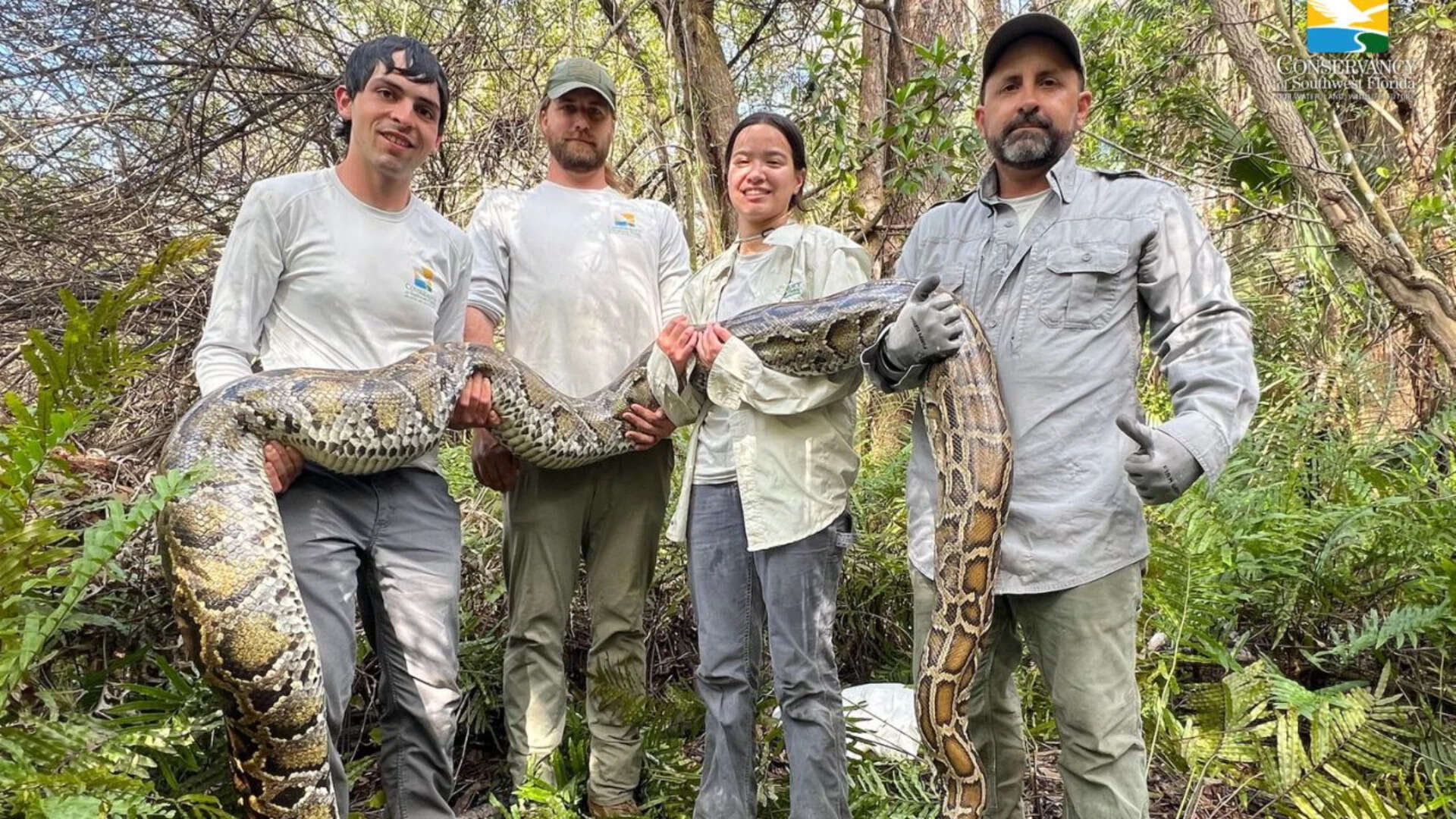
In Florida, scientists discovered that captive female pythons failed to attract wild males. Utilizing artificial intelligence, researchers sifted through millions of camera images, revealing few python sightings. Additionally, attempts to use mammalian scent lures for detecting the invasive Burmese pythons proved futile. However, there is optimism as removal strategies in the Everglades are progressing, bolstered by hunting and radio tracking initiatives aimed at controlling the invasive species population. In Florida, scientists discovered that captive female pythons failed to attract wild males. Utilizing artificial intelligence, researchers sifted through millions of camera images, revealing few python sightings. Additionally, attempts to use mammalian scent lures for detecting the invasive Burmese pythons proved futile. However, there is optimism as removal strategies in the Everglades are progressing, bolstered by hunting and radio tracking initiatives aimed at controlling the invasive species population.