




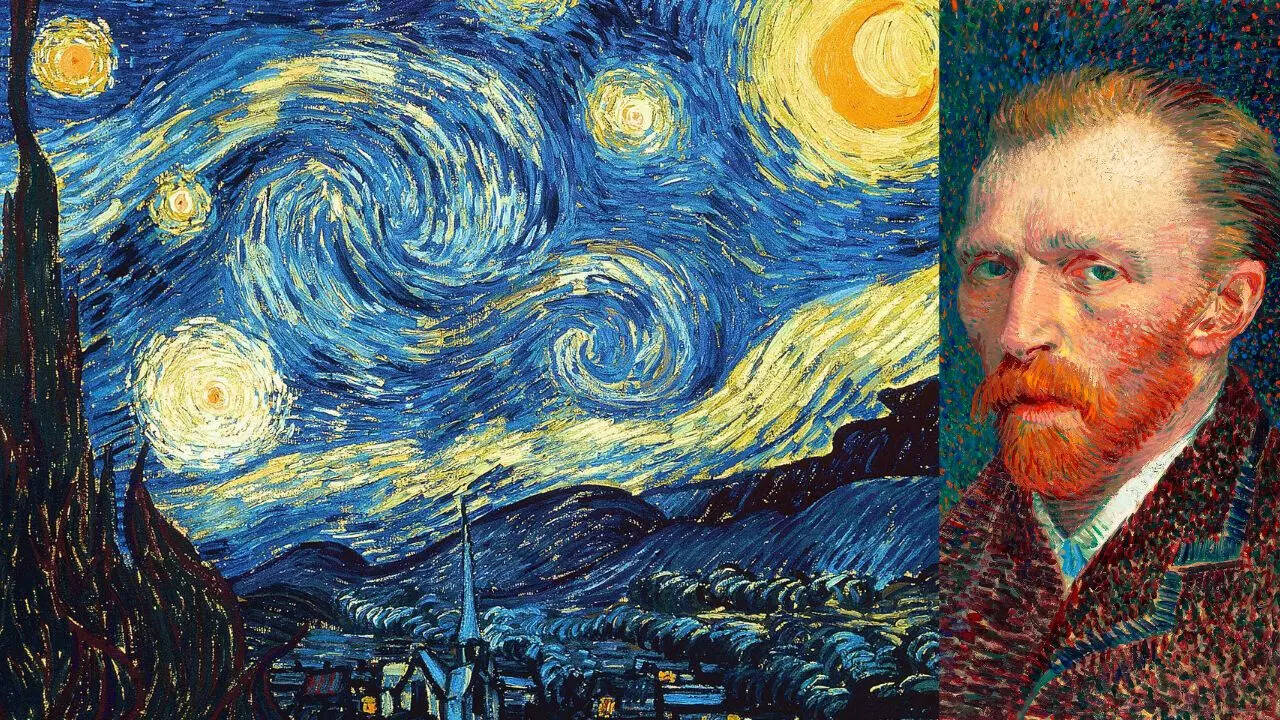
Vincent van Gogh’s iconic “The Starry Night” has revealed a scientific secret. Physicists analyzing the painting’s swirling patterns discovered they closely resemble the statistical models of turbulence, a complex natural phenomenon. This suggests Van Gogh, through his keen observation, captured the visual essence of fluid motion over a century before scientists could mathematically describe it, making his masterpiece a surprising echo of nature’s mysteries Vincent van Gogh’s iconic “The Starry Night” has revealed a scientific secret. Physicists analyzing the painting’s swirling patterns discovered they closely resemble the statistical models of turbulence, a complex natural phenomenon. This suggests Van Gogh, through his keen observation, captured the visual essence of fluid motion over a century before scientists could mathematically describe it, making his masterpiece a surprising echo of nature’s mysteries