




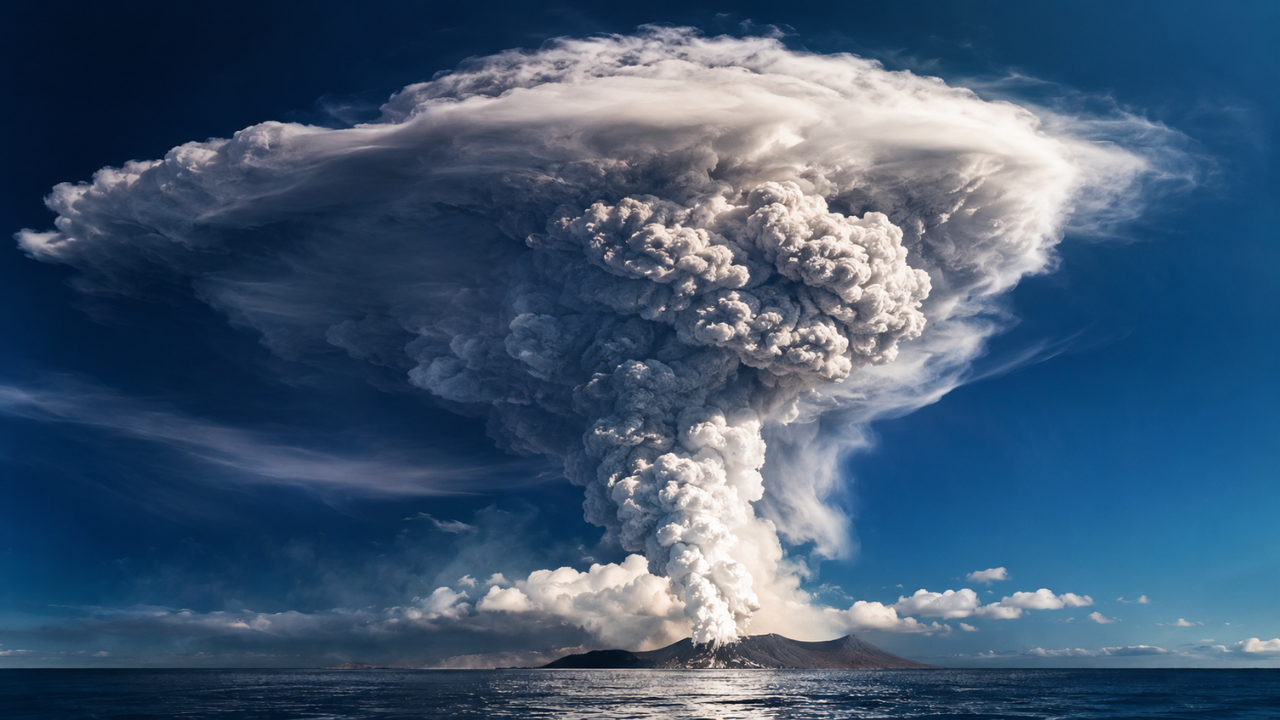
An eruption from an underwater volcano released a massive cloud of water vapor into the stratosphere, impacting global weather patterns for two years. This additional moisture led to an initial cooling effect on the stratosphere while also modifying circulation patterns. The presence of sulfate aerosols played a significant role in blocking sunlight, creating a stronger cooling influence. An eruption from an underwater volcano released a massive cloud of water vapor into the stratosphere, impacting global weather patterns for two years. This additional moisture led to an initial cooling effect on the stratosphere while also modifying circulation patterns. The presence of sulfate aerosols played a significant role in blocking sunlight, creating a stronger cooling influence.