
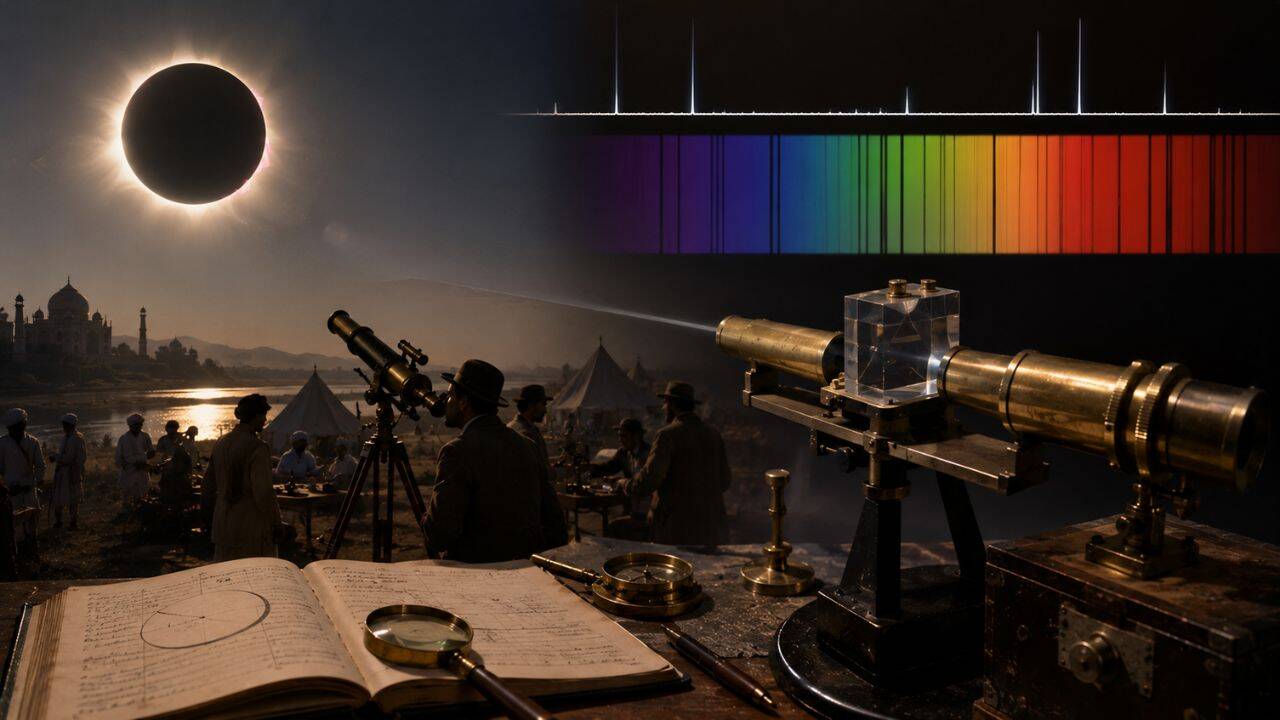
During the solar eclipse of 1868 in India, astronomers stumbled upon an enigmatic yellow spectral line, initially observed by Pierre Jules Janssen. Although its significance was not immediately recognized, Norman Lockyer soon named the unidentified element helium upon further analysis. Eventually, William Ramsay verified helium’s presence on Earth in 1895 by extracting it from a mineral, solidifying Janssen’s pioneering approach to studying solar prominences. During the solar eclipse of 1868 in India, astronomers stumbled upon an enigmatic yellow spectral line, initially observed by Pierre Jules Janssen. Although its significance was not immediately recognized, Norman Lockyer soon named the unidentified element helium upon further analysis. Eventually, William Ramsay verified helium’s presence on Earth in 1895 by extracting it from a mineral, solidifying Janssen’s pioneering approach to studying solar prominences.
Trending
- IPL cricketer Abishek Porel arrested in rape case
- Punjab’s viral ‘zombie drug’ video triggers row – the controversy explained
- Russian missile, air bomb strikes kill 6 in Ukraine; fires reported in Kyiv
- Over 95% of Ukrainian PoWs report torture in Russian captivity: United Nations
- Syria’s ousted leader Bashar al-Assad sentenced to death for crimes against humanity
- Kitchen confidential: Rot, raids and reality checks from Mumbai and Bengaluru
- In 1970, Sylvia Earle led five women into an underwater lab for 14 days
- ‘Zealots overlooked human nature’: Shashi Tharoor questions full Vande Mataram rendition at official events

In 1868, an eclipse in India revealed an element found on Earth 27 years later
 By
By

Add A Comment