





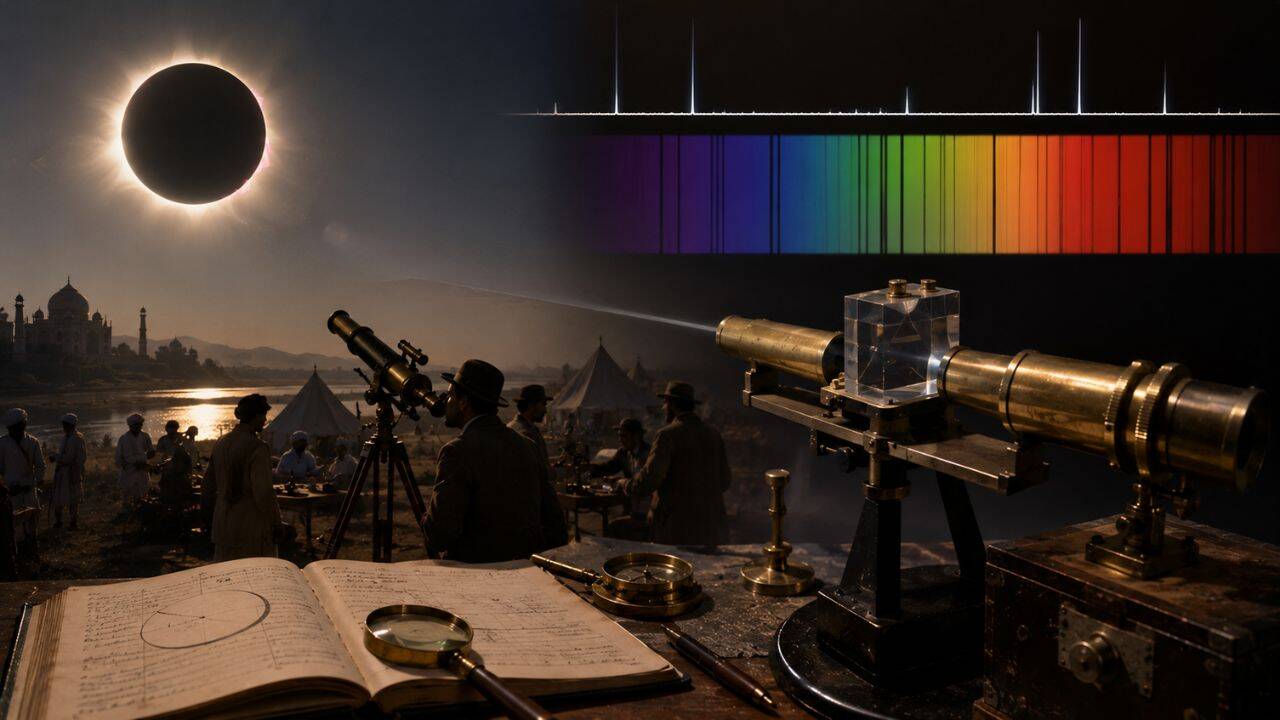
During the solar eclipse of 1868 in India, astronomers stumbled upon an enigmatic yellow spectral line, initially observed by Pierre Jules Janssen. Although its significance was not immediately recognized, Norman Lockyer soon named the unidentified element helium upon further analysis. Eventually, William Ramsay verified helium’s presence on Earth in 1895 by extracting it from a mineral, solidifying Janssen’s pioneering approach to studying solar prominences. During the solar eclipse of 1868 in India, astronomers stumbled upon an enigmatic yellow spectral line, initially observed by Pierre Jules Janssen. Although its significance was not immediately recognized, Norman Lockyer soon named the unidentified element helium upon further analysis. Eventually, William Ramsay verified helium’s presence on Earth in 1895 by extracting it from a mineral, solidifying Janssen’s pioneering approach to studying solar prominences.