
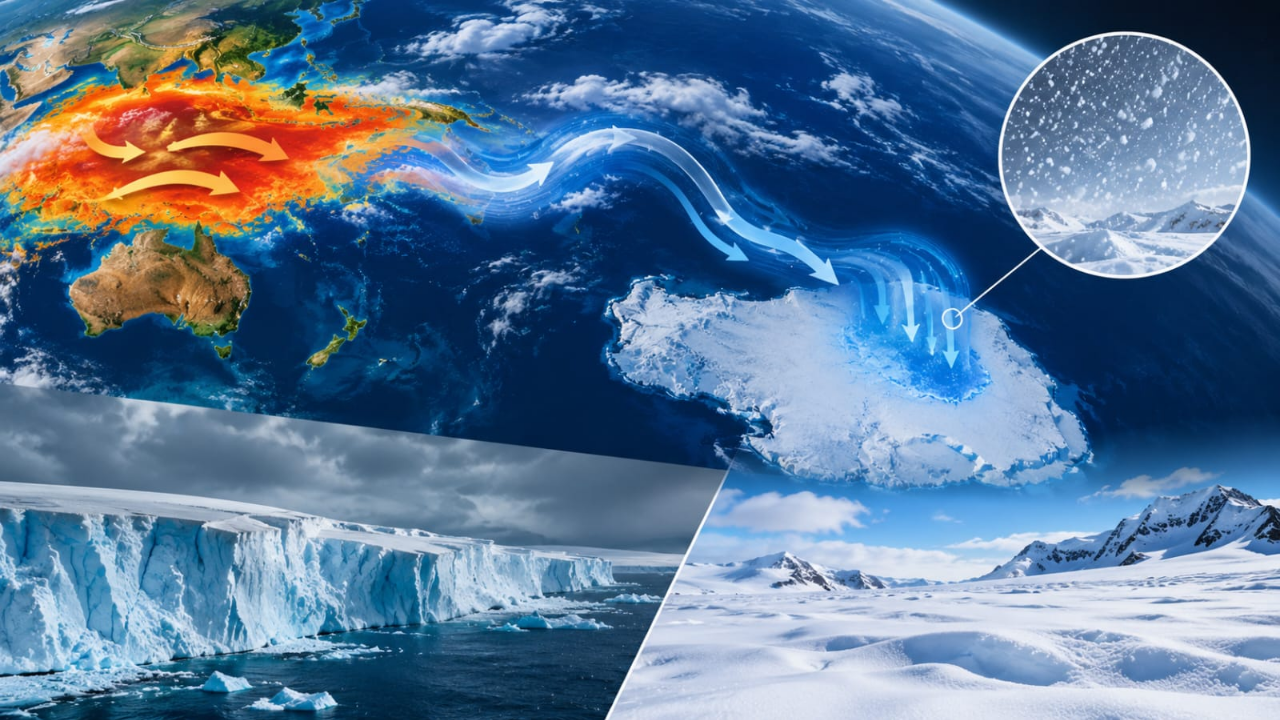
Between 2021 and 2023, Antarctica experienced a notable gain in ice mass, primarily driven by exceptional snowfall in East Antarctica. This unusual occurrence, influenced by warmer tropical ocean temperatures, caused atmospheric disturbances that transported moisture southward. Although this gain temporarily countered ongoing ice loss in other regions, it does not signify a change in Antarctica’s long-term trend of declining ice mass. Between 2021 and 2023, Antarctica experienced a notable gain in ice mass, primarily driven by exceptional snowfall in East Antarctica. This unusual occurrence, influenced by warmer tropical ocean temperatures, caused atmospheric disturbances that transported moisture southward. Although this gain temporarily countered ongoing ice loss in other regions, it does not signify a change in Antarctica’s long-term trend of declining ice mass.
Trending
- Iran launched fresh attack on US navy ships Monday amid China, Russia aid fears
- Klamath River salmon reclaim 88% of historic range after dams are removed
- Strategic autonomy in motion as India hosts Brics summit
- Cox Enterprises protects 4,400 South Carolina acres worth hundreds of millions forever
- India, Japan to conduct two-week air exercise Veer Guardian in Jodhpur from today
- 1st Corps Commander-level India-China talks in eastern sector held over 2 days: MEA; says ties gradually moving in positive direction
- Just 1% of asylum seekers in UK genuine, insider says, as UN blasts Britain for allowing bogus claims
- Antarctica gained record 695 billion tons of ice after decades of loss

Antarctica gained record 695 billion tons of ice after decades of loss
 By
By

Add A Comment