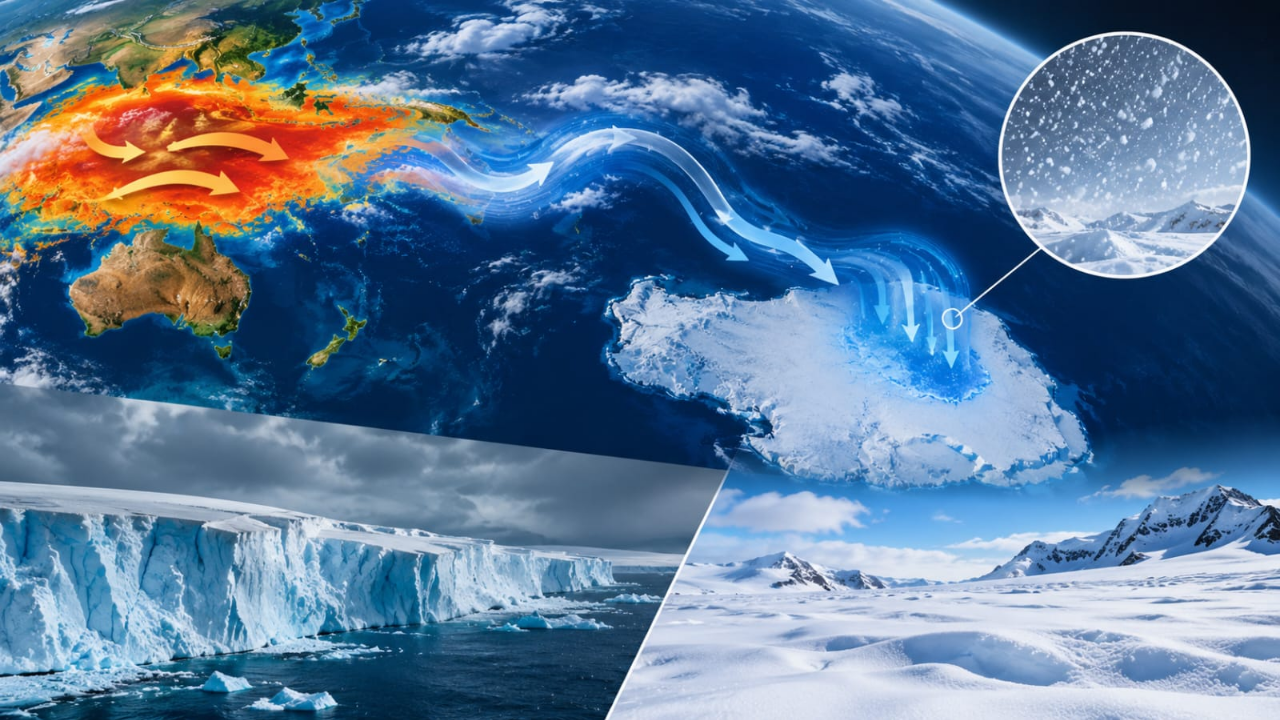






Between 2021 and 2023, Antarctica experienced a notable gain in ice mass, primarily driven by exceptional snowfall in East Antarctica. This unusual occurrence, influenced by warmer tropical ocean temperatures, caused atmospheric disturbances that transported moisture southward. Although this gain temporarily countered ongoing ice loss in other regions, it does not signify a change in Antarctica’s long-term trend of declining ice mass. Between 2021 and 2023, Antarctica experienced a notable gain in ice mass, primarily driven by exceptional snowfall in East Antarctica. This unusual occurrence, influenced by warmer tropical ocean temperatures, caused atmospheric disturbances that transported moisture southward. Although this gain temporarily countered ongoing ice loss in other regions, it does not signify a change in Antarctica’s long-term trend of declining ice mass.