
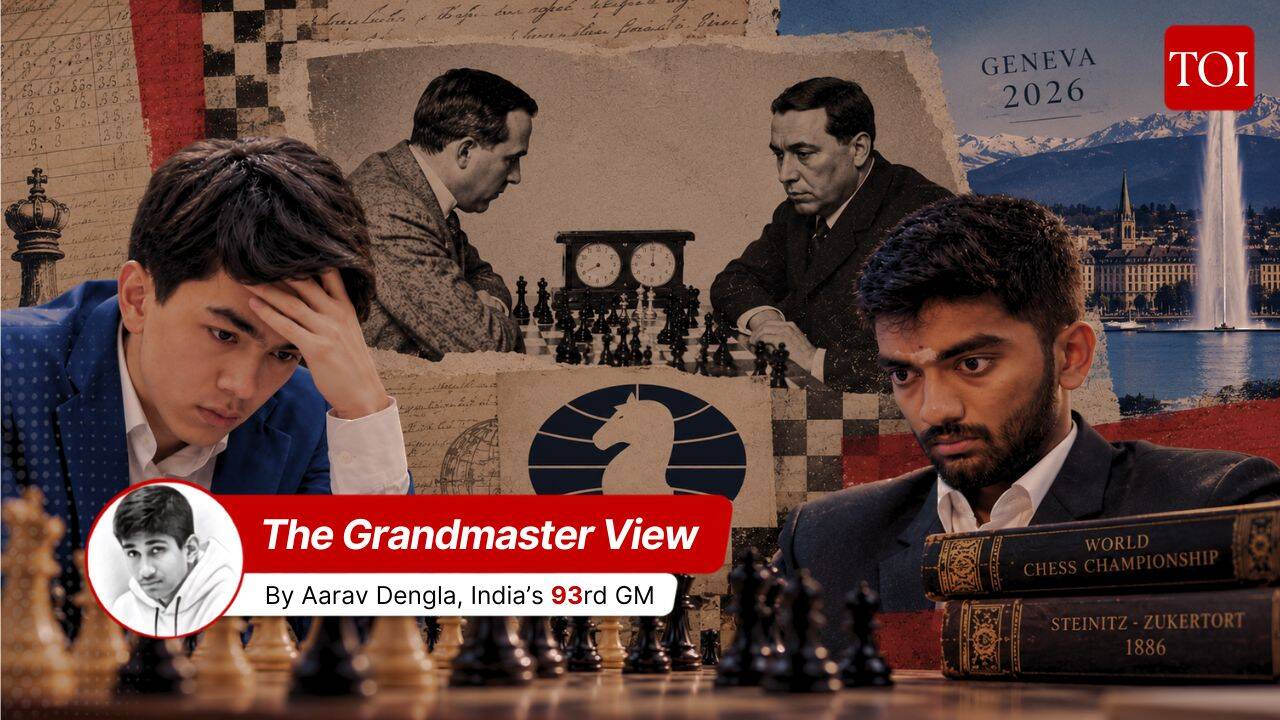
For much of its history, the world chess championship was not a title a player could simply qualify to challenge for. From Steinitz–Zukertort in 1886 to the long disputes involving Lasker, Capablanca and Rubinstein, challengers had to raise money, negotiate terms and persuade champions to play. As Gukesh prepares to defend his title against Sindarov in Geneva, the USD 2.5 million match offers a striking contrast: the challenger has earned his shot through a formal qualifying system. For much of its history, the world chess championship was not a title a player could simply qualify to challenge for. From Steinitz–Zukertort in 1886 to the long disputes involving Lasker, Capablanca and Rubinstein, challengers had to raise money, negotiate terms and persuade champions to play. As Gukesh prepares to defend his title against Sindarov in Geneva, the USD 2.5 million match offers a striking contrast: the challenger has earned his shot through a formal qualifying system.
Trending
- $4 thrift shop cup turns out to be rare rhino-horn treasure worth $75,640
- NSW’s 1946 dune fix became coastal invasion covering 46% of coastline
- Siya, lover studied ‘Mansi’s Lohagad death’, ‘mushroom killing’ before Ketan’s murder
- Help your child memorize a chapter in 15 mins: 5 tricks that beat rereading
- The Price of a Title Shot: When challengers had to pay to face the champion
- ‘Gandhi, Nehru, Ambedkar are India’s soul, mind, backbone’: Dipke’s jibe at Centre
- India’s Asian Games medal map changed: 20 Hangzhou golds gone, 13 new routes to gold
- Bridges under attack: Why Russia is targeting Kyiv’s vital crossings

The Price of a Title Shot: When challengers had to pay to face the champion
 By
By

Add A Comment