



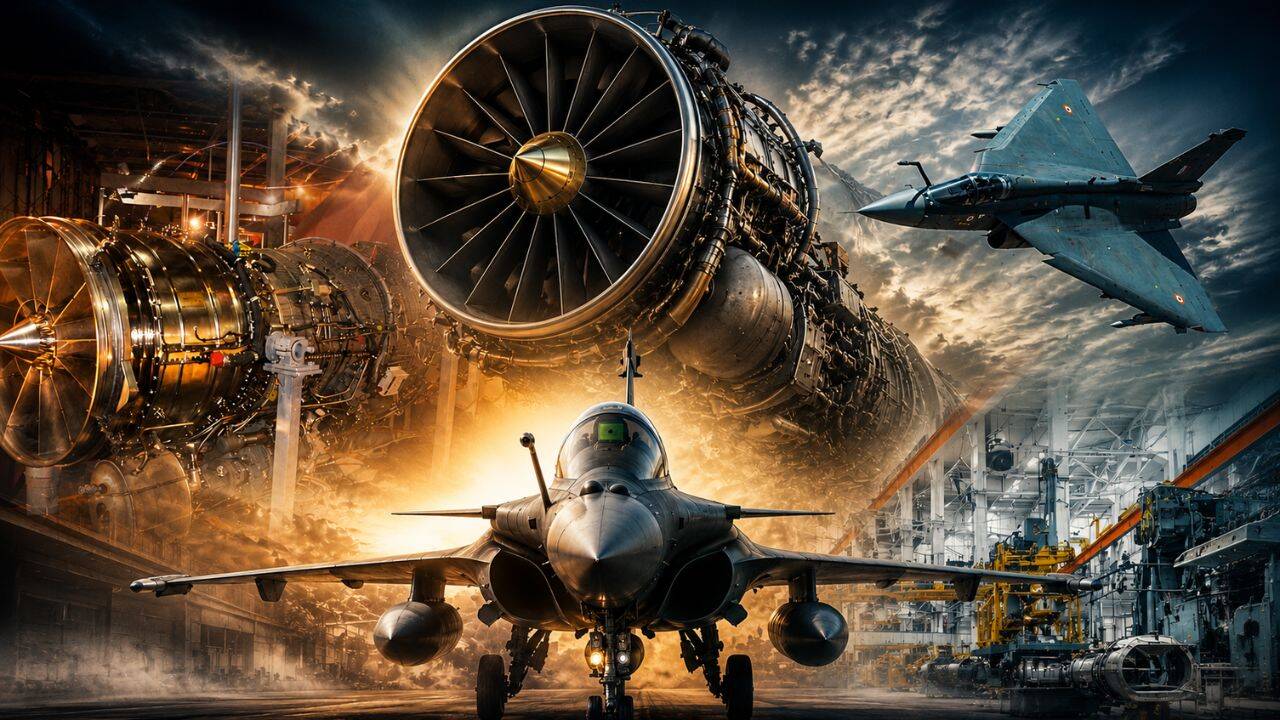
India’s strive to be “atmanirbhar” in engines is not a story of 2026. In 1986, the government had tasked DRDO’s Gas Turbine Research Establishment (GTRE) with building the indigenous Kaveri engine to power the then-nascent Tejas light combat aircraft. What followed was four decades of heartbreak. Despite nine prototype engines, over 3,200 hours of testing, and a budget overrun of 642 per cent, the Kaveri produced only 70.4 kilonewtons (kN) of wet thrust against a required 81 kilonewtons. India’s strive to be “atmanirbhar” in engines is not a story of 2026. In 1986, the government had tasked DRDO’s Gas Turbine Research Establishment (GTRE) with building the indigenous Kaveri engine to power the then-nascent Tejas light combat aircraft. What followed was four decades of heartbreak. Despite nine prototype engines, over 3,200 hours of testing, and a budget overrun of 642 per cent, the Kaveri produced only 70.4 kilonewtons (kN) of wet thrust against a required 81 kilonewtons.