
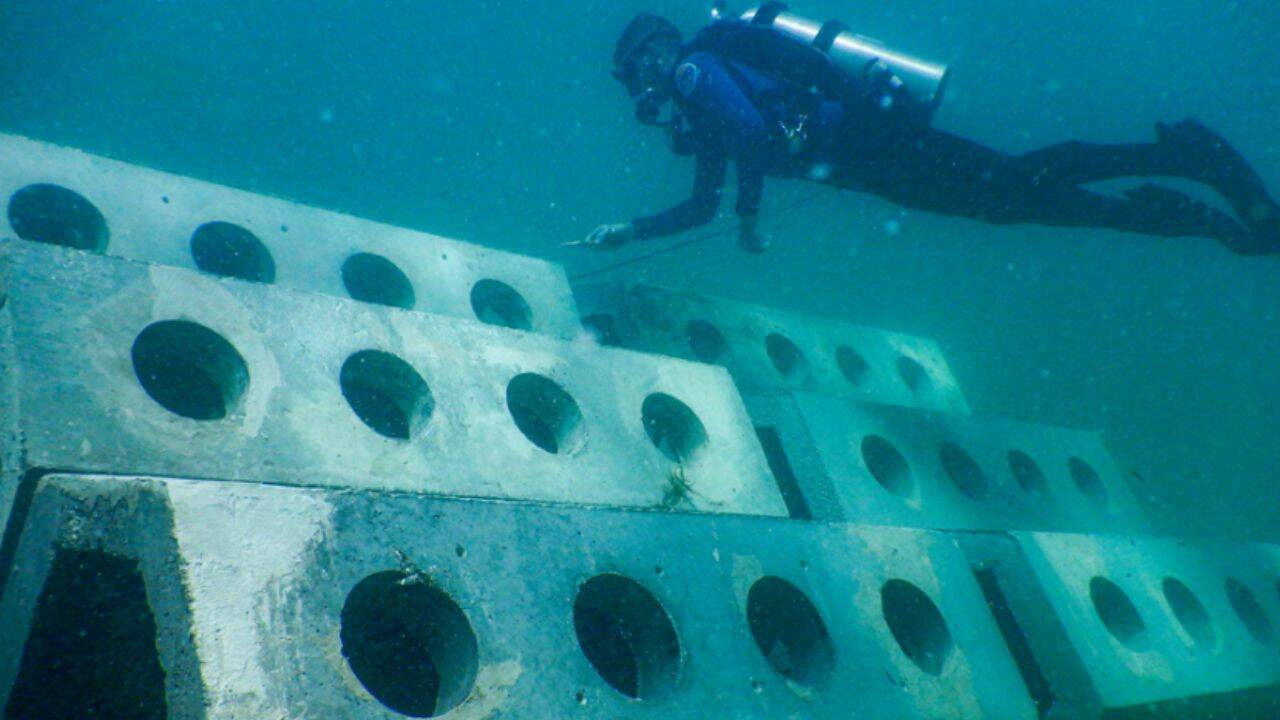
A 2002 study examined 12 artificial reefs built off Miami Beach using limestone boulders, concrete-gravel aggregate and concrete mixed with waste tyre chips. Divers surveyed the reefs every two months from October 1998 to February 2001, recording fish species, numbers and sizes, along with spiny lobsters. They counted 97,826 fish from 146 species. The researchers found no significant difference in fish abundance, biomass or species richness between the three reef materials. However, comparisons before and after deployment showed that the artificial reefs increased local fish abundance and species richness. A 2002 study examined 12 artificial reefs built off Miami Beach using limestone boulders, concrete-gravel aggregate and concrete mixed with waste tyre chips. Divers surveyed the reefs every two months from October 1998 to February 2001, recording fish species, numbers and sizes, along with spiny lobsters. They counted 97,826 fish from 146 species. The researchers found no significant difference in fish abundance, biomass or species richness between the three reef materials. However, comparisons before and after deployment showed that the artificial reefs increased local fish abundance and species richness.
Trending
- Watch: ‘Unsafe’ Rajasthan govt school building demolished after CJP campaign
- Big economic boost: Japan upgrades India’s sovereign rating to A- amid strong growth
- ‘Chidiya chug gayi khet’: Pakistan cricketer takes swipe at PCB after England debacle
- From Sushant Singh Rajput ‘link’ to CBI probe: The Disha Salian case so far
- Meet a 17-year-old Thai student who built artificial hornbill nests from plastic
- New Zealand’s heaviest parrot surges from 51 to 325 after decades of conservation
- Miami Beach reefs built in 1998 later attracted 97,826 fish from 146 species
- Clint Eastwood’s ranch donation now forms 128-acre California restoration site

Miami Beach reefs built in 1998 later attracted 97,826 fish from 146 species
 By
By

Add A Comment