
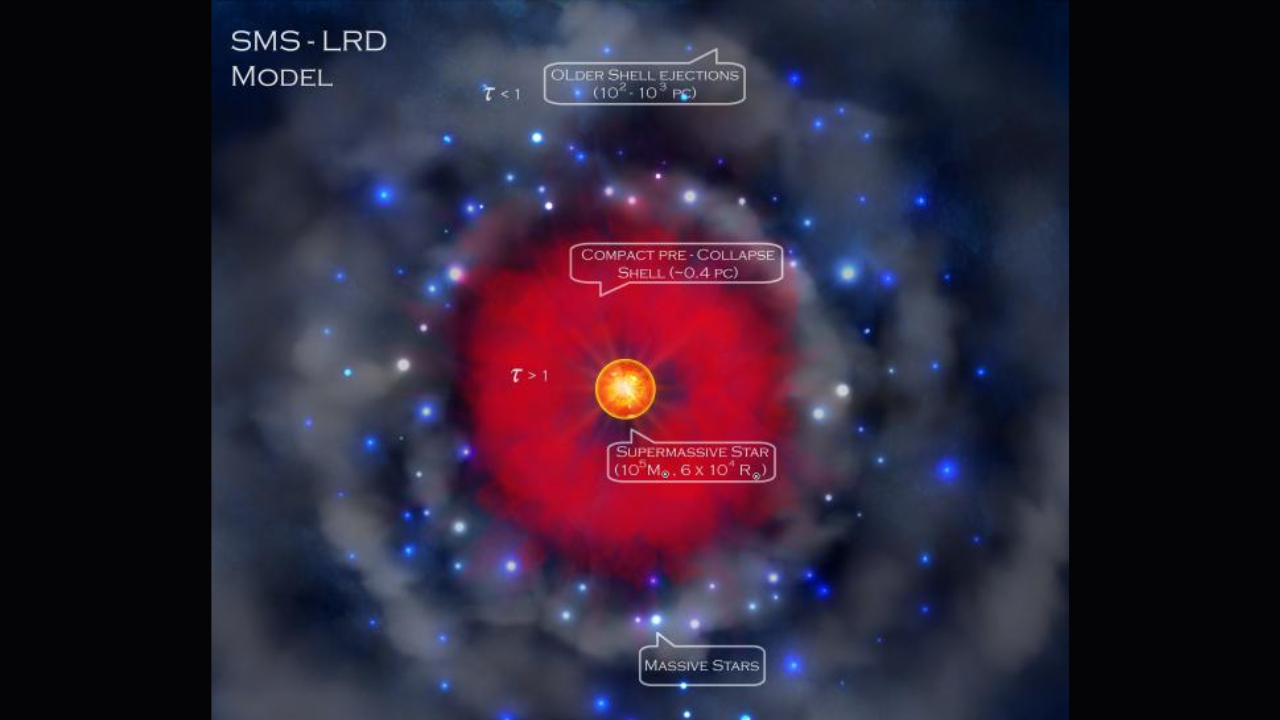
Recent findings indicate that colossal “monster stars,” reaching masses up to 100,000 times that of our Sun, may hold the key to understanding the enigmatic “little red dots” observed in the early universe. These gigantic stars, through their tumultuous pulsations, generate dense gas shells that may facilitate the swift emergence of supermassive black holes. This innovative research presents a comprehensive model to account for the characteristics of these cosmic phenomena. Recent findings indicate that colossal “monster stars,” reaching masses up to 100,000 times that of our Sun, may hold the key to understanding the enigmatic “little red dots” observed in the early universe. These gigantic stars, through their tumultuous pulsations, generate dense gas shells that may facilitate the swift emergence of supermassive black holes. This innovative research presents a comprehensive model to account for the characteristics of these cosmic phenomena.
Trending
- Sharif begins 3-day Saudi visit, pushes defence ties amid West Asia escalation
- Girl’s bald-head joke thanking teacher draws 420,000 views
- Quote of the day by Michael Fassbender: “I’ve always been more inclined to go out to work than…”
- Andy Burnham ‘personally intervenes’ as UK reviews early release of grooming gang offenders
- ’12 years in the US, leaving with empty hands’: Indian woman says her H-1B was revoked because employer didn’t run payroll
- ‘He deserves to be remembered’: British man who wrongly spent 11 years in jail raises funds to restore murder victim’s grave
- Denzel Washington’s quote on winning the battle within and mastering yourself
- Chicago homeowner sues US govt over alleged warrantless immigration raid that damaged property

James Webb’s little red dots may be monster stars that seeded black holes
 By
By

Add A Comment