
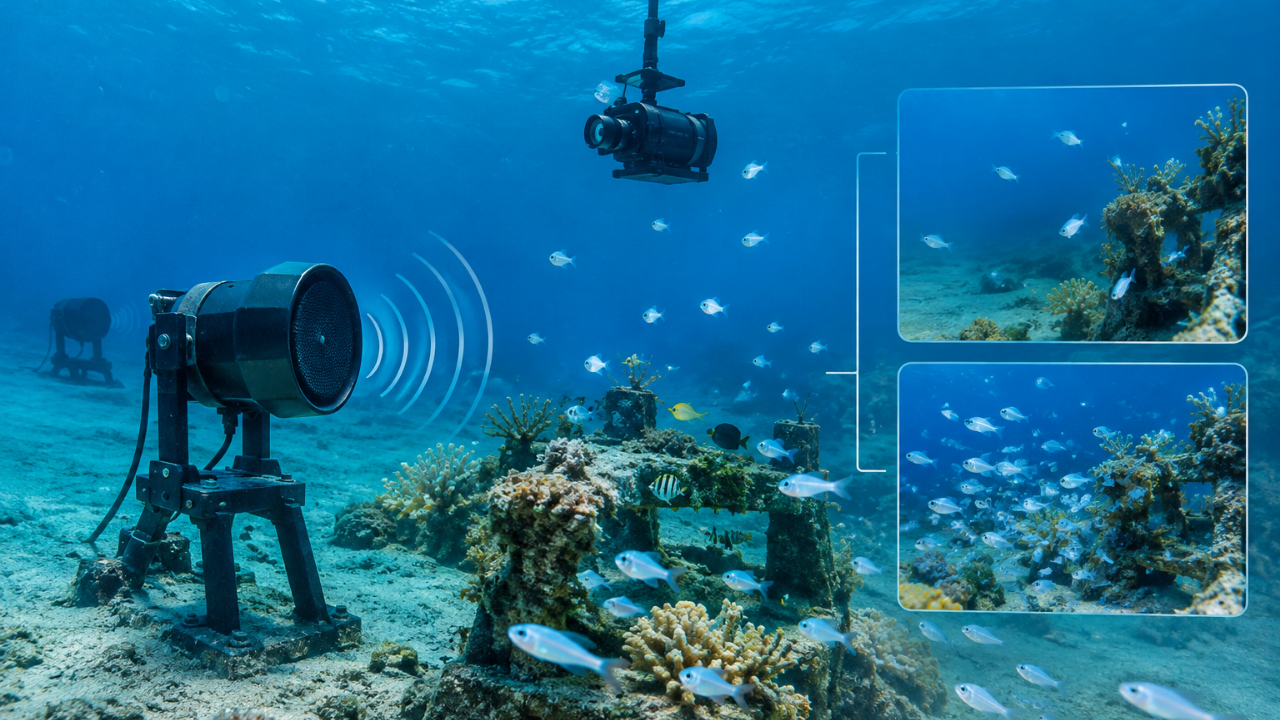
In an exciting breakthrough, scientists discovered that playing sounds from thriving coral reefs significantly draws in young fish larvae. The study conducted in Kāne‘ohe Bay revealed an uptick in larval presence at sites featuring these sound recordings. However, the increased attraction was transient. This pioneering research indicates that using natural soundscapes might support reef restoration efforts, highlighting the need for further investigation into the lasting impacts on fish populations. In an exciting breakthrough, scientists discovered that playing sounds from thriving coral reefs significantly draws in young fish larvae. The study conducted in Kāne‘ohe Bay revealed an uptick in larval presence at sites featuring these sound recordings. However, the increased attraction was transient. This pioneering research indicates that using natural soundscapes might support reef restoration efforts, highlighting the need for further investigation into the lasting impacts on fish populations.
Trending
- ‘Leo, Leo’ chants echo across Paris as 800,000 attend Pope Leo’s mass
- Dale Earnhardt Jr.’s estate hides 75+ wrecked race cars and Wild West town
- 4 killed as helicopter crashes in field in Canada’s Quebec, probe launched
- India’s right to defend itself from terrorism will be exercised: EAM
- Higher EPF wage limit: Monthly PF contributions rise to Rs 3,917
- Kharge, Sonia and Rahul pay homage to late PM Manmohan Singh
- Hawai‘i reef sounds lured 4 to 14 times more baby fish, study finds
- 10 women dead in 2 months: South Africa probes possible links in Ekurhuleni killings

Hawai‘i reef sounds lured 4 to 14 times more baby fish, study finds
 By
By

Add A Comment