
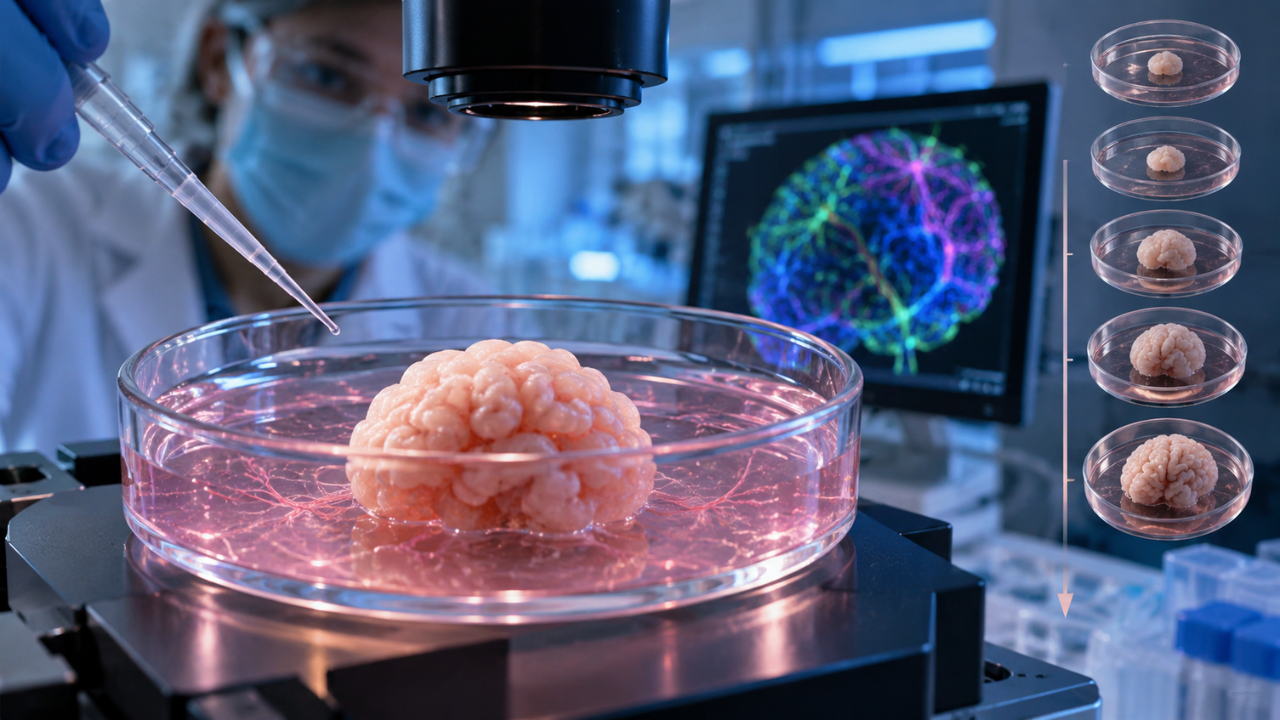
Harvard neuroscientists have kept human brain organoids alive for over five years. These organoids matured and followed molecular patterns of human brain development. Older cells retained developmental information, allowing them to skip ahead in neuron production. Improved culture conditions and nutrient supplements supported the organoids’ extended survival. This breakthrough offers new avenues for studying brain biology and disease progression.
Trending
- Philippines court orders arrest of VP Sara Duterte over ‘assassin’ remarks targeting President’s family
- 37 dead in oil theft attempt after inhaling toxic fumes in Nigeria
- Army kills one terrorist in joint operation in J&K; search for another underway
- Former Ravens coach John Harbaugh’s 1905 Maryland stone mansion sells for $6M
- 2,000 pairs of underwear were buried across Switzerland to test the soil
- Las Vegas crossing guard steps in front of car to protect mother and children
- Indian-origin man convicted of manslaughter for fatally stabbing man who asked him to stop smoking at Starbucks
- Heavy rain lashes parts of Delhi-NCR; IMD issues red alert, flights ops hit

Harvard scientists keep brain organoids alive for over five years, mimicking brain development
 By
By

Add A Comment