




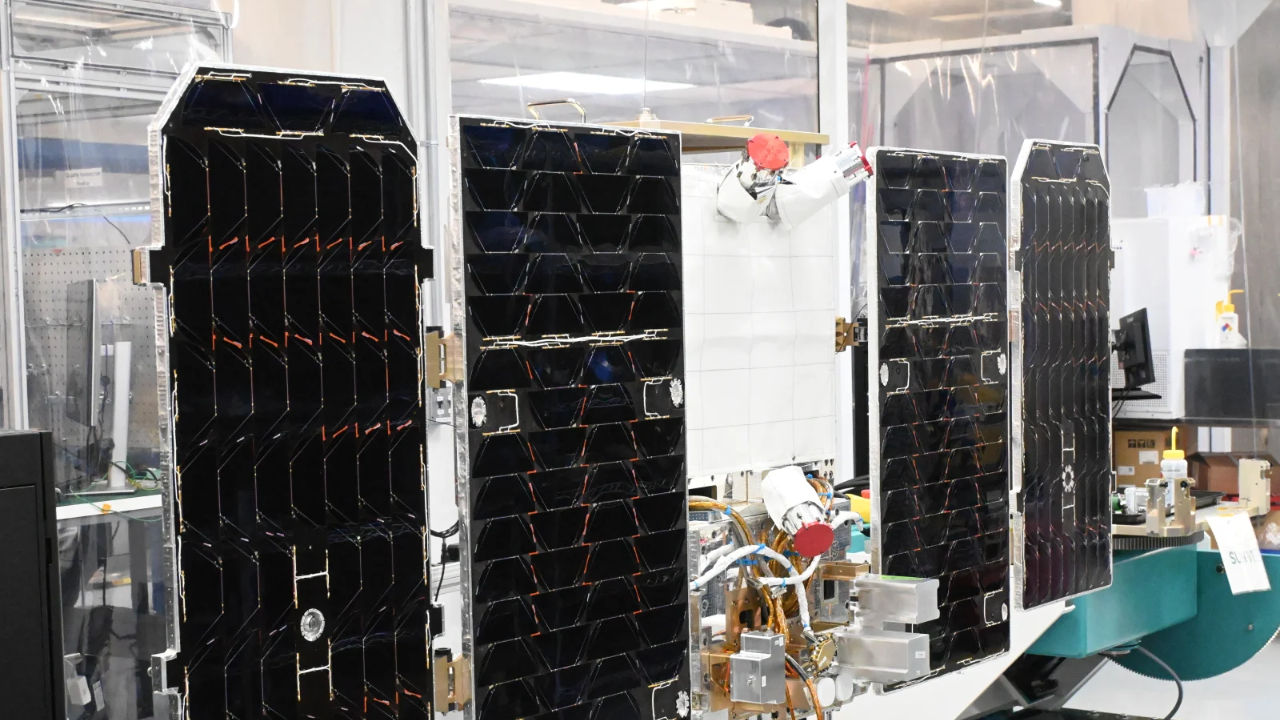
Google has run its first AI prompt in space using its Project Suncatcher prototype satellite, powered by Tensor Processing Units (TPUs) and Google DeepMind’s Gemma 4 model. The experiment tests whether AI computing can work in orbit despite radiation, heat and power constraints. Google plans to launch two more satellites with laser links in 2027, advancing its vision of solar-powered orbital data centres for future AI workloads. Google has run its first AI prompt in space using its Project Suncatcher prototype satellite, powered by Tensor Processing Units (TPUs) and Google DeepMind’s Gemma 4 model. The experiment tests whether AI computing can work in orbit despite radiation, heat and power constraints. Google plans to launch two more satellites with laser links in 2027, advancing its vision of solar-powered orbital data centres for future AI workloads.