





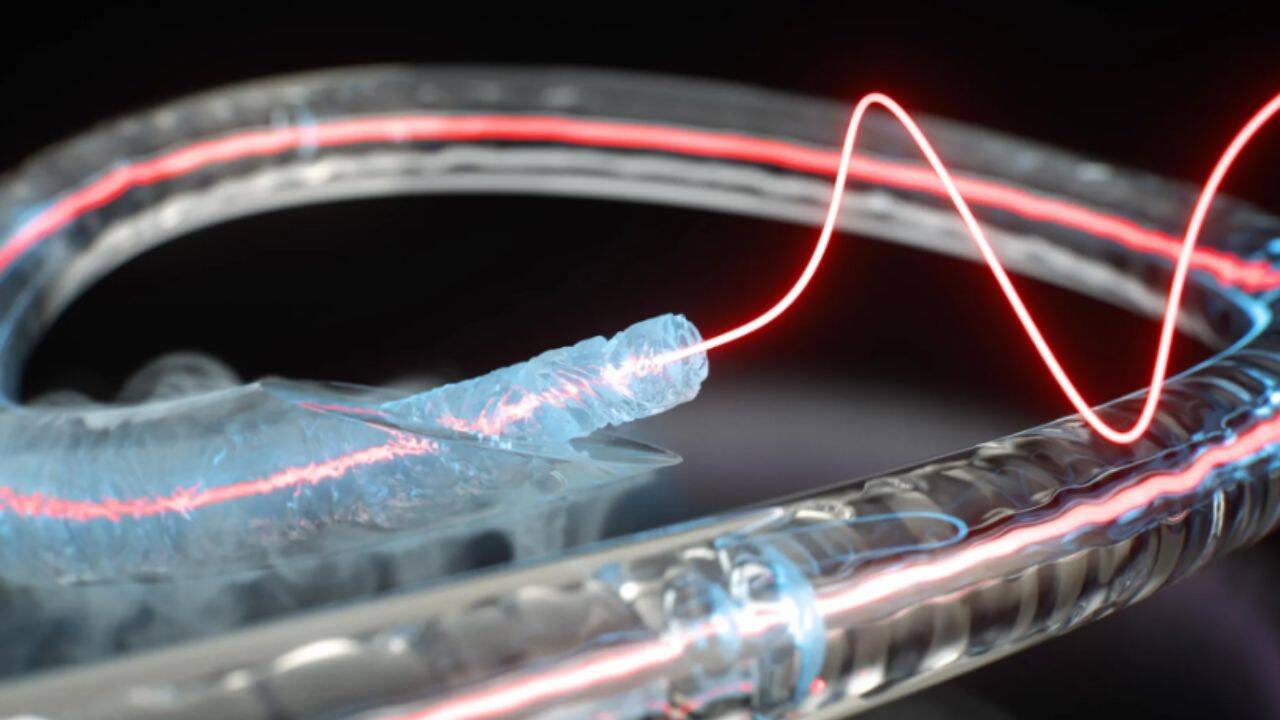
Scientists have frozen the liquid inside a special optical fibre to -196°C, creating conditions where light and sound interact more than 1,000 times more strongly than in ordinary fibres. The team found that the frozen fibre could still guide light and hypersonic sound waves. The breakthrough also helped researchers demonstrate optoacoustic memory, which could have potential applications in lower-energy photonic computing, quantum information processing and high-precision sensing. Scientists have frozen the liquid inside a special optical fibre to -196°C, creating conditions where light and sound interact more than 1,000 times more strongly than in ordinary fibres. The team found that the frozen fibre could still guide light and hypersonic sound waves. The breakthrough also helped researchers demonstrate optoacoustic memory, which could have potential applications in lower-energy photonic computing, quantum information processing and high-precision sensing.