
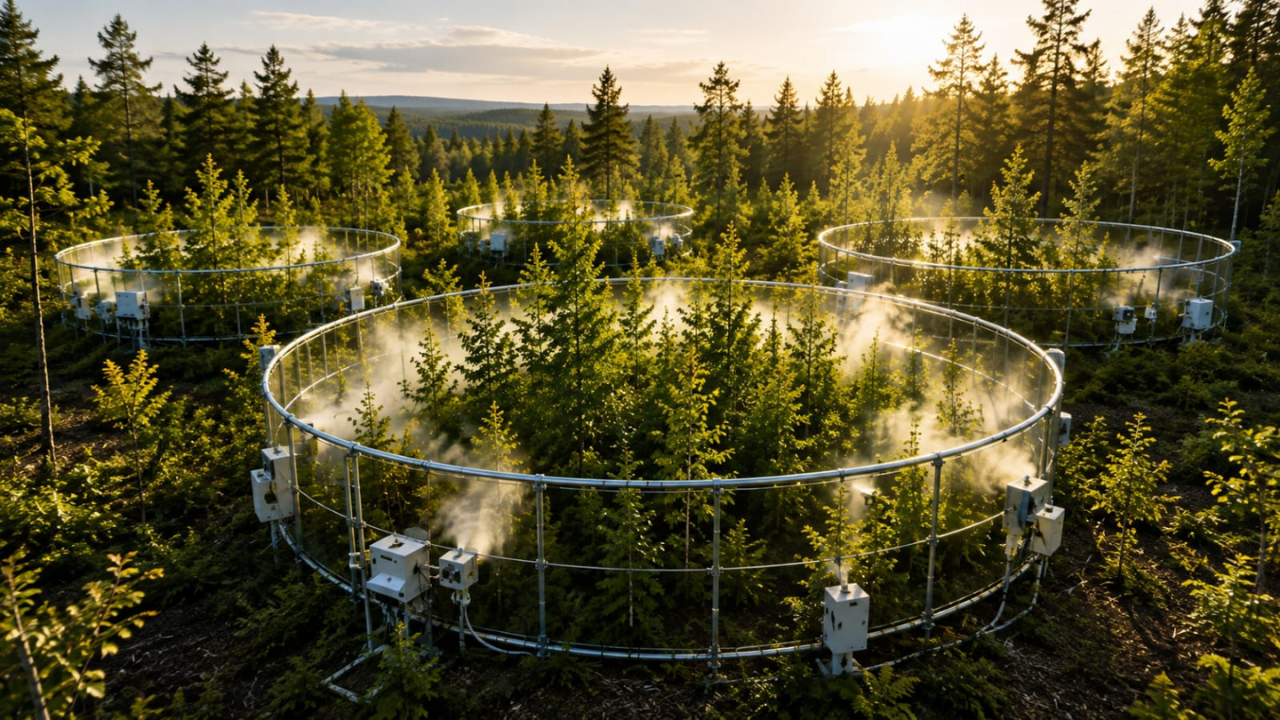
A Wisconsin experiment studied forest communities exposed to high carbon dioxide and ozone. Elevated carbon dioxide significantly increased forest productivity and carbon storage over eleven years. Conversely, increased ozone levels reduced forest productivity and ecosystem carbon content. The combined effects showed carbon dioxide stimulating growth and ozone limiting it. These findings highlight forests’ complex responses to atmospheric changes. A Wisconsin experiment studied forest communities exposed to high carbon dioxide and ozone. Elevated carbon dioxide significantly increased forest productivity and carbon storage over eleven years. Conversely, increased ozone levels reduced forest productivity and ecosystem carbon content. The combined effects showed carbon dioxide stimulating growth and ozone limiting it. These findings highlight forests’ complex responses to atmospheric changes.
Trending
- How discarded Christmas trees are being used to build dunes on a UK beach
- Four private Michigan islands spanning 520 acres hit the market for $2.3 million
- ‘Adjectives keep changing’: Kharge attacks PM Modi over ‘Naraz Fufa’ jibe at Congress
- Doctors ‘abused’, staffer slapped at Palghar hospital; Shiv Sena chief booked
- Both pilots killed as Greek fighter jet crashes during air show near Athens
- ‘Zero control of its border’: Trump tears into Spain over Ceuta migrant crisis
- 147 years after Hall Effect discovery, scientists find it works in-plane
- Extra CO2 boosted Wisconsin forest productivity 39%, but ozone cut the gain

Extra CO2 boosted Wisconsin forest productivity 39%, but ozone cut the gain
 By
By

Add A Comment