
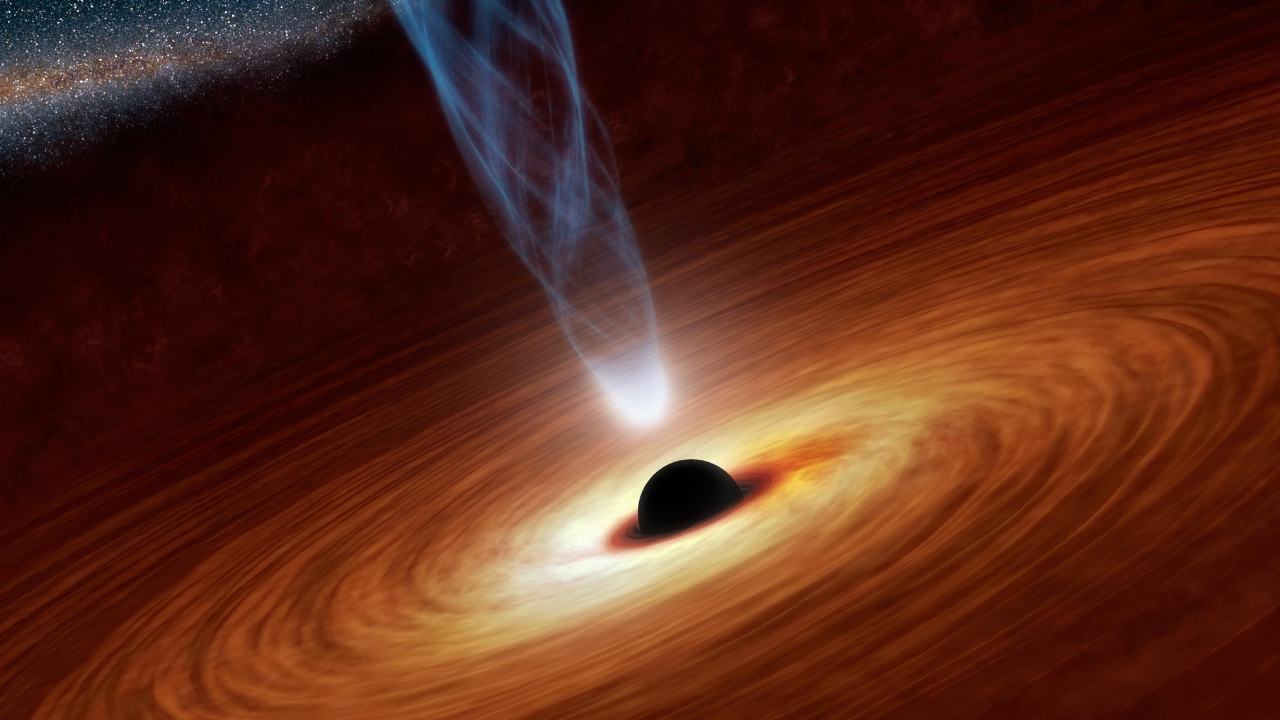
Astronomers may have found a new way to investigate the Universe’s first supermassive black holes. A faint gravitational-wave hum detected through pulsars could contain clues about ancient objects. Hypothetical Dark Stars, powered partly by dark matter, could have left black-hole descendants. These ancient black-hole seeds could grow and merge, producing part of the gravitational-wave background.
Trending
- In 2021, Amazon shut US rooftop solar after six incidents at 47 sites; audit found 259 issues
- Seychelles island restoration grew sooty tern colony from 20,000 to 700,000
- ‘Violation of High Court order won’t be tolerated’: Agnimitra Paul reacts after FIR against Mamata Banerjee
- US mother pleads guilty to killing 11-month-old son to keep him from his father, says it was ‘worth it’
- Hyderabad horror: 21-year-old nurse found dead with bleeding injuries on her face
- Iran war creates two front defence dilemma for US against China and Russia
- Iowa plant turns retired wind turbine blades into fibres and powders for roads
- In 2019, a YouTuber was challenged to plant millions of trees, today his campaign has planted 25 million worldwide

Astronomers hear a mysterious cosmic hum linked to strange dark stars from 13 billion years ago
 By
By

Add A Comment