
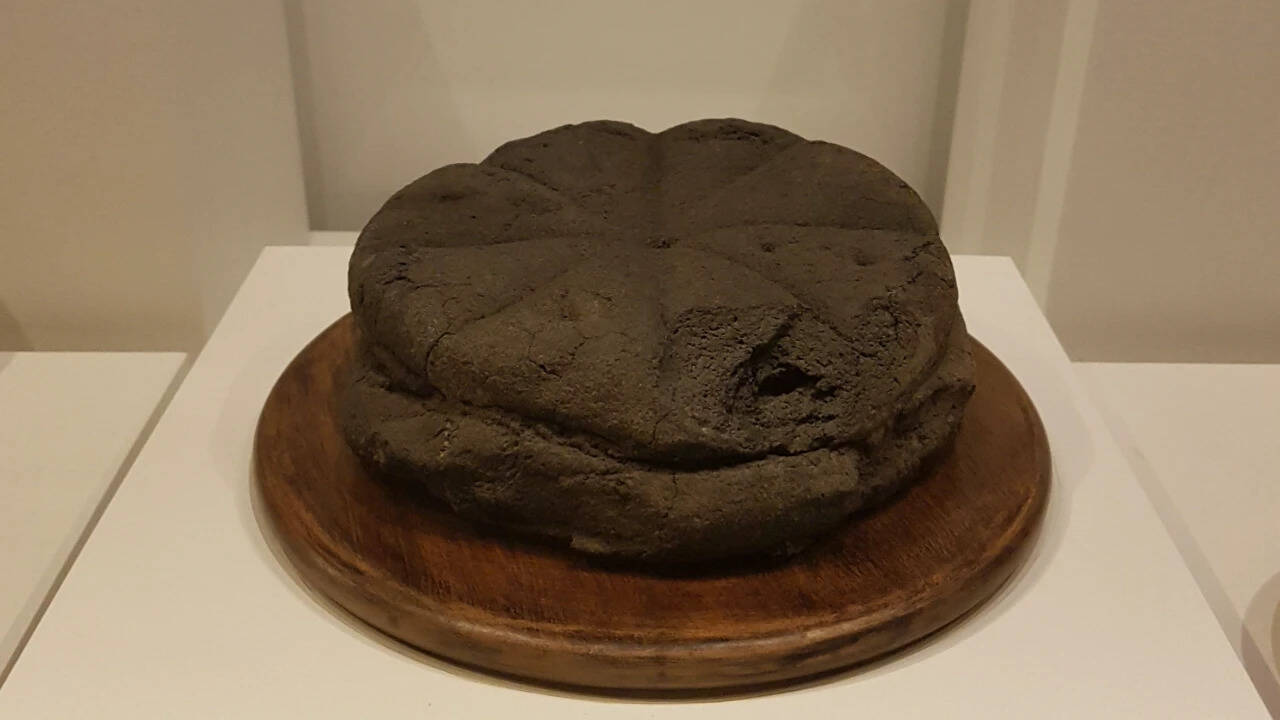
A loaf of bread left inside an oven in Herculaneum during the AD 79 eruption of Mount Vesuvius was discovered carbonised during excavations in 1930. The nearly 2,000-year-old find offers a glimpse into ancient Roman food habits. The British Museum later recreated the bread, while other preserved loaves reveal how Romans divided bread into portions and used stamps to identify it. A loaf of bread left inside an oven in Herculaneum during the AD 79 eruption of Mount Vesuvius was discovered carbonised during excavations in 1930. The nearly 2,000-year-old find offers a glimpse into ancient Roman food habits. The British Museum later recreated the bread, while other preserved loaves reveal how Romans divided bread into portions and used stamps to identify it.
Trending
- India’s forex kitty shrinks by $1.27 billion as gold reserves slide
- How two US friends turned a small haunted house into a multimillion-dollar Halloween business
- Meet Landon Hoberman: Teen’s campaign prevents 8.1 million plastic utensils
- Jharkhand women turn Rs 2 savings into Rs 6 lakh ragi collective
- Manisha Bhanwala becomes India’s first women’s world wrestling champion
- Jio Q2 results: Profit jumps 14% to Rs 8,389 crore, revenue up 11.4%
- Indian-origin woman who went missing in August found dead in a canal in California. Detectives had looked into the canal before but could not locate her
- ‘Against Islamic teachings’: Taliban bans sight-saving eye operations

2,000-year-old Vesuvius bread still shows 8 segments and baker’s stamp
 By

Add A Comment