
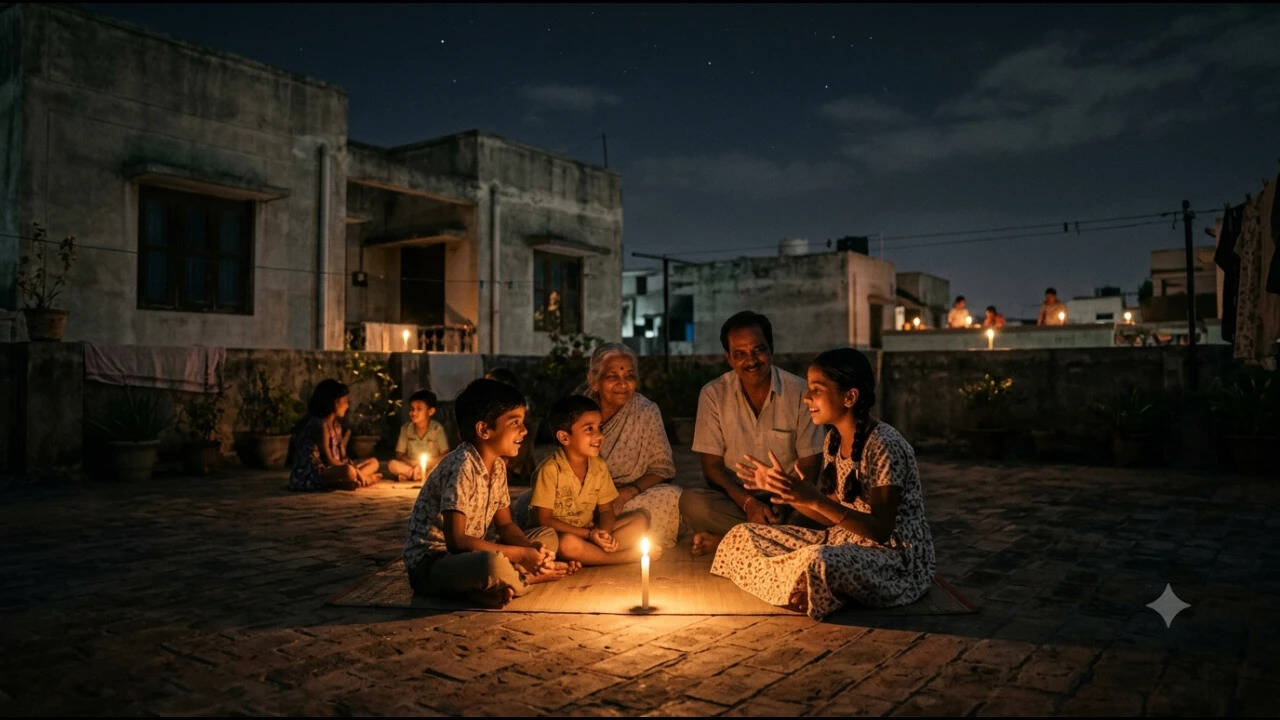
In the 1980s, power cuts often led to evenings filled with children’s games and storytelling. Families gathered around candles, creating bonds and sharing experiences during blackouts. Without television or homework, children had the chance to invent their own entertainment and connect with one another. This break from electricity fostered a slower pace of life and increased family interaction. In the 1980s, power cuts often led to evenings filled with children’s games and storytelling. Families gathered around candles, creating bonds and sharing experiences during blackouts. Without television or homework, children had the chance to invent their own entertainment and connect with one another. This break from electricity fostered a slower pace of life and increased family interaction.
Trending
- Australian homeowner blames six trees for damage to her 130-year-old home; court finds no link
- New Jersey AI data center hit with record $1.07M penalty over 62 gas generators
- Gyanesh Kumar should be criminally prosecuted for ‘treason’: Priyanka Gandhi targets EC over SIR row
- Tamil Nadu Pocso case: Businessman Veeramani, aide arrested; what we know so far
- 6 Ukrainians accused of training armed rebels in India, Myanmar get default bail
- ‘Restore access’: US court blocks Trump’s ban on TV networks from White House
- California returns $886m in electricity bill credits, about $75 per household
- At 90, former paratrooper sets world-best 10K time for his age

80s kids loved power cuts: When blackouts meant terrace games and ghost stories
 By
By

Add A Comment