


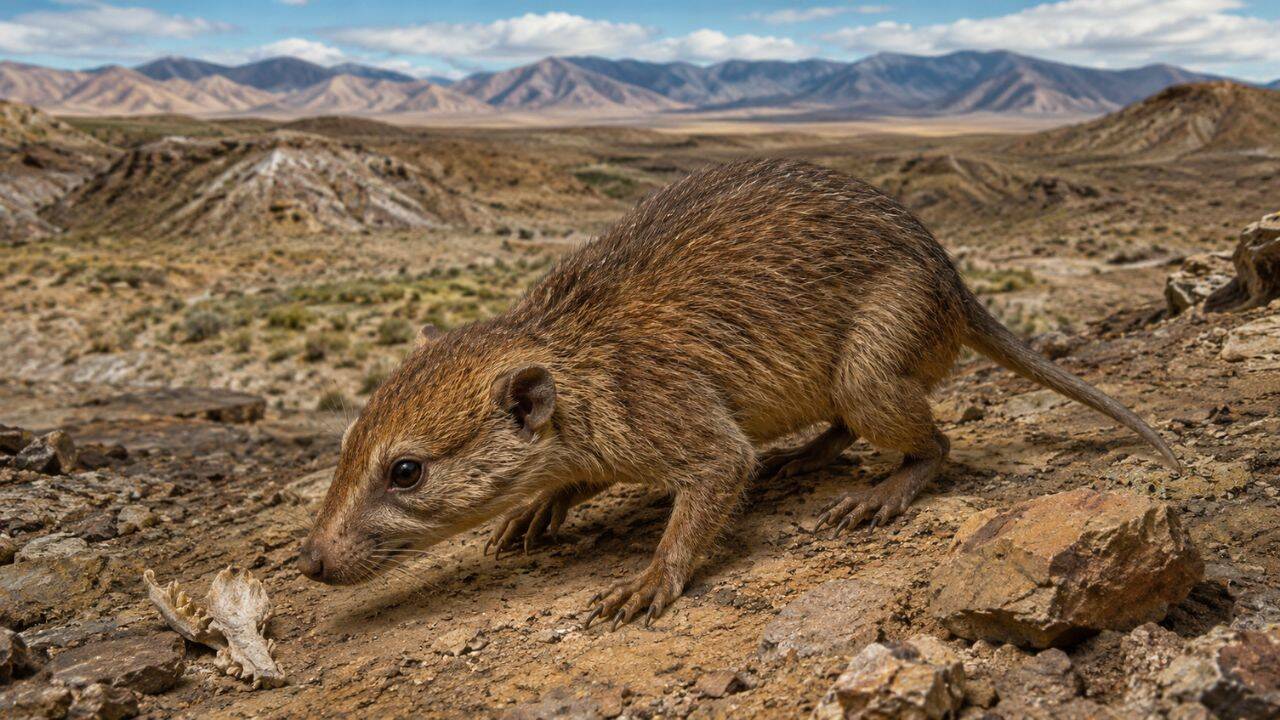
A new fossil from Mongolia’s Gobi Desert has reshaped mammalian evolutionary understanding. This 70-million-year-old Tamirkhan balcarceli fossil belonged to zhelestids, which were previously misunderstood. The complete skeleton shows zhelestids were not early placental mammals as once thought. Instead, they were part of the extinct zalambdalestoid lineage, which evolved similar teeth independently. This discovery alters interpretations of mammalian diversity during the Late Cretaceous period.

Trending
- Ethanol blending saved consumers Rs 30/litre during crude spike: Govt
- India, Bhutan sign Rs 4,000-crore credit pact, review development projects
- Punjab man Gurpreet Singh added to FBI’s ‘most wanted’ over alleged drug trafficking, illegal arms trade
- Brand-new Royal Enfield had defects on first ride, buyer wins over Rs 2.3 lakh
- Quote of the day by Richard Feynman: “The first principle is that you must not fool yourself and…”
- 70-million-year-old mammal fossil discovered in Mongolia rewrites the story of early mammal evolution
- Netherlands tried to recreate prehistoric Europe on reclaimed land
- A Swedish doctor spent 80 minutes trapped beneath river ice. Months later, she returned to work after one of medicine’s most extraordinary recoveries