
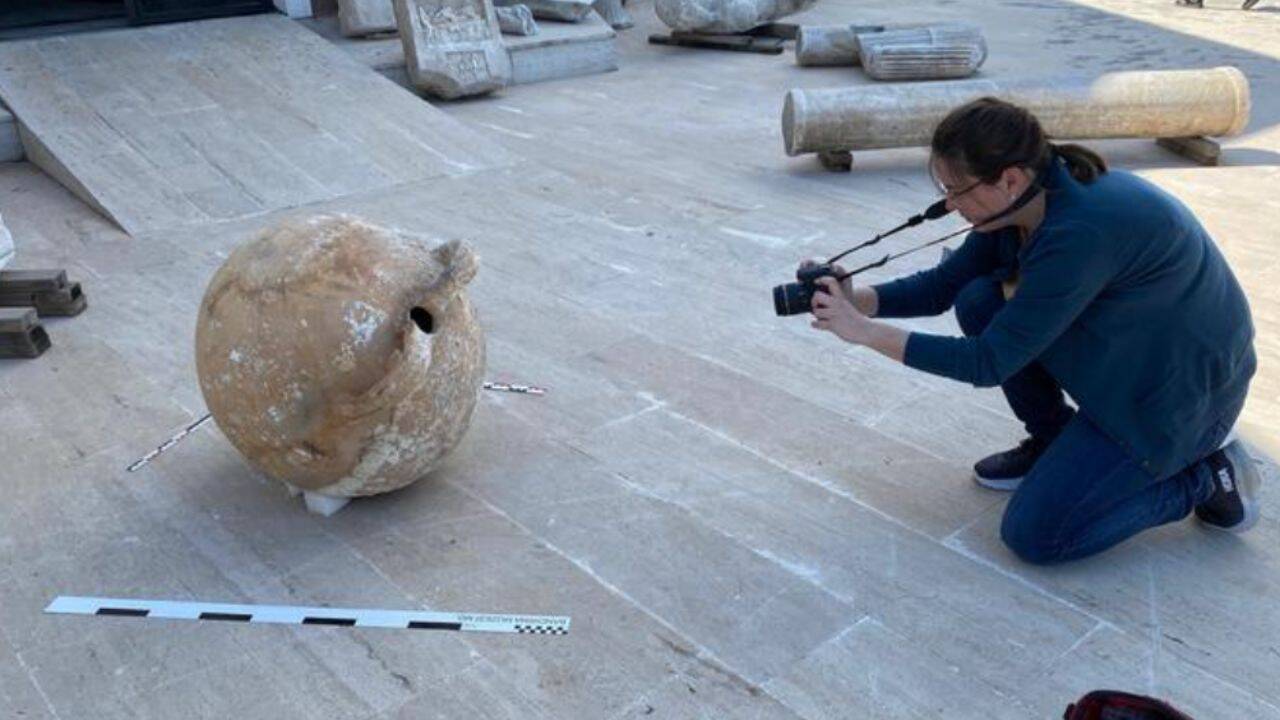
Researchers at Koc University have developed a method that uses photogrammetry, 3D printing and embedded sensors to repair damaged ancient pottery. The customised 3D-printed sections can replace missing parts while monitoring temperature, humidity, pH and physical stress. Tested on maritime amphorae from Türkiye and Italy, the approach could help conservators track changes and support long-term preservation. Researchers at Koc University have developed a method that uses photogrammetry, 3D printing and embedded sensors to repair damaged ancient pottery. The customised 3D-printed sections can replace missing parts while monitoring temperature, humidity, pH and physical stress. Tested on maritime amphorae from Türkiye and Italy, the approach could help conservators track changes and support long-term preservation.
Trending
- 12 people arrested in connection with UK A66 crash that killed 7, including 2 police officers
- US unleashes ‘Malice’: F-35C gets a 463-km air-to-air strike reach
- Blind Egyptian entrepreneur builds AI app that describes the world through audio
- A British metal detectorist thought he’d found a bull’s nose ring
- India was wary of Trump’s ‘unpredictable behaviour’, chose no joint presser with PM Modi: Report
- Tons of fish die in Polish canal as toxic algae bloom spreads alarm
- ‘I was living paycheck to paychek’: Woman says coming back to India from UK after 4 years not happiest decision but right one for nervous system
- Govt seeks generation data from rooftop solar

3D-printed replacements let conservators monitor damage inside ancient pottery
 By
By

Add A Comment