
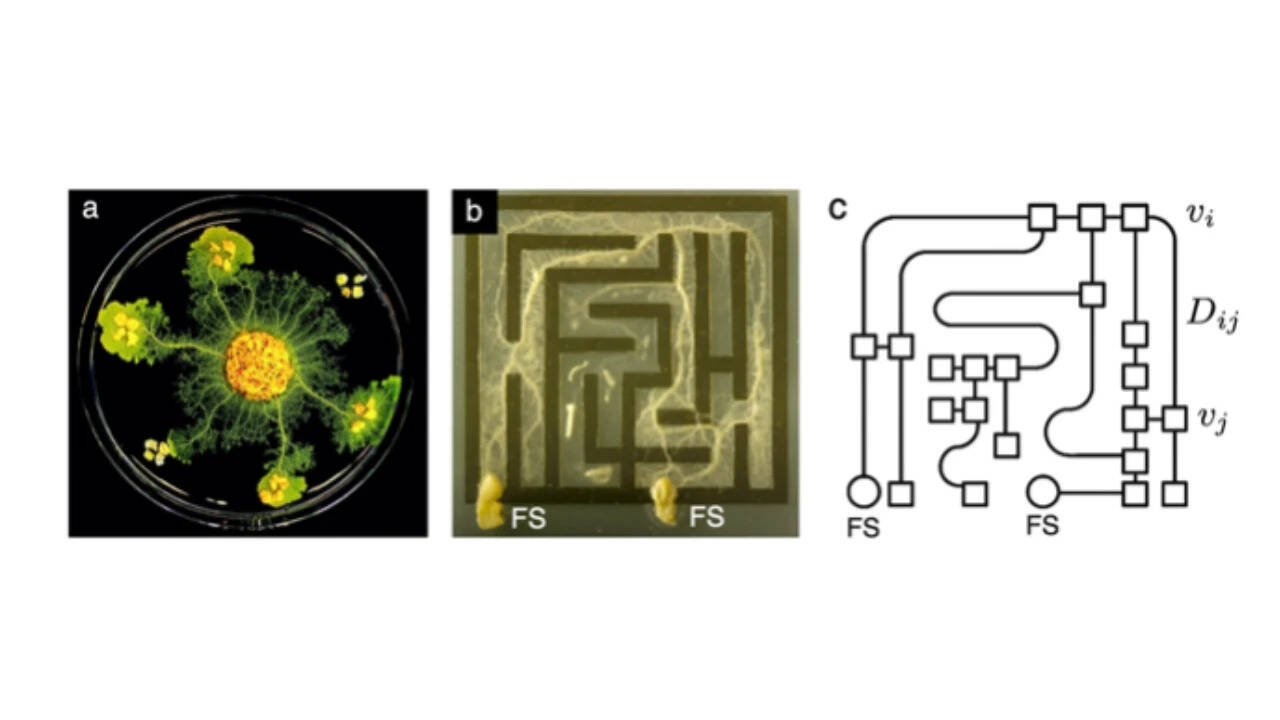
At Pompeu Fabra University, scientists have explored the fascinating navigation strategies of the slime mould Physarum polycephalum, revealing its maze-solving abilities despite the absence of a nervous system. The research indicates that this organism rearranges its network of tubes to better transport nutrients and select efficient routes. Employing mathematical frameworks, the study attributes these capabilities to the principle of least action, challenging our perceptions of intelligence across biological systems.
Trending
- Louisiana couple’s shared driveway row ends as court overturns $1,500 sanctions
- 36 years after rediscovery, over 1,000 endangered iguanas returned to Jamaica
- Court rules in favour of public access after Jeremy Clarkson blocks coastal path on Isle of Man
- ‘Indians were seen as techies, not CEOs’: Kanwal Rekhi recalls being replaced before IPO
- How does a brainless slime mold find the shortest path through a maze?
- Congress defends decision to support TVK amid INDIA bloc outreach to Stalin over delimitation bill
- Golf Course Closure Dispute: Trump says flooding devastated park; judge’s order keeps it open
- ‘I would never have dropped Siraj’: Sourav Ganguly questions Gautam Gambhir’s call

How does a brainless slime mold find the shortest path through a maze?
 By

Add A Comment