
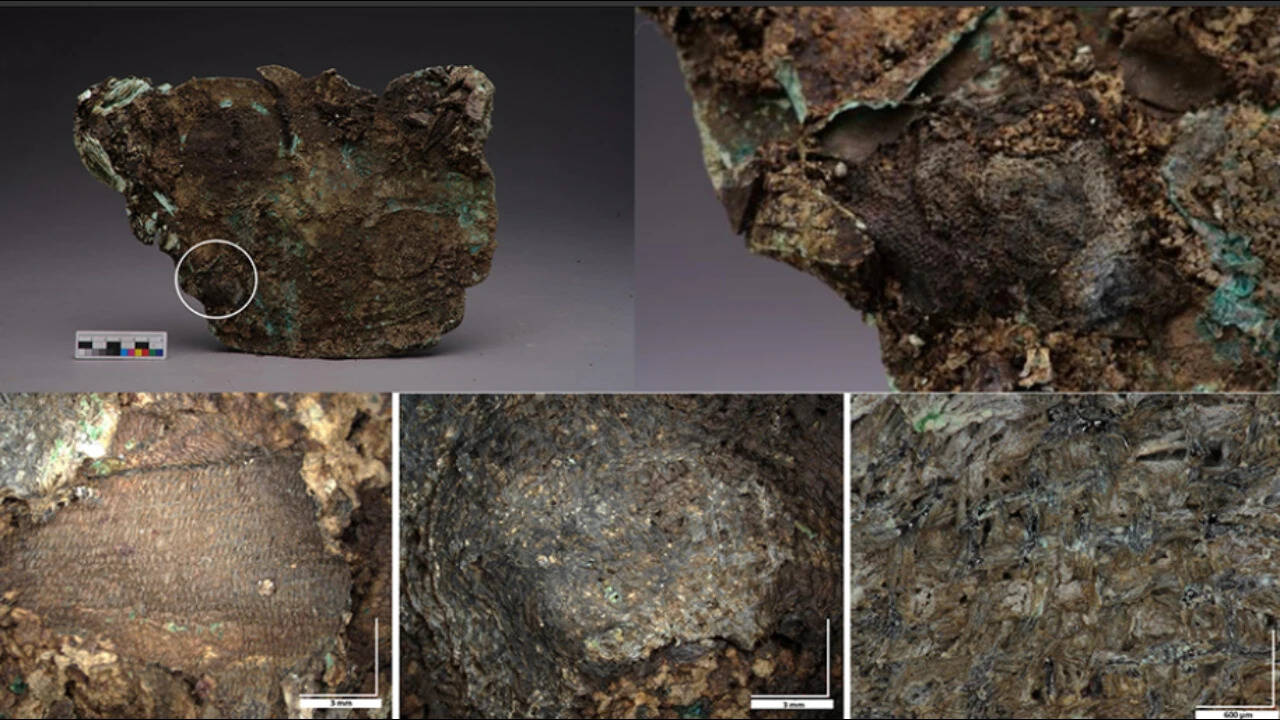
Scientists studying 3,000-year-old objects from China’s Sanxingdui archaeological site have found silk traces on 101 artefacts, including bronze masks, gold, jade and ivory objects. Published in the journal Antiquity, the study suggests that ancient Shu people used silk to wrap or cover objects during rituals. Researchers also identified red pigments and different weaving patterns, offering clues about ancient textile practices. Scientists studying 3,000-year-old objects from China’s Sanxingdui archaeological site have found silk traces on 101 artefacts, including bronze masks, gold, jade and ivory objects. Published in the journal Antiquity, the study suggests that ancient Shu people used silk to wrap or cover objects during rituals. Researchers also identified red pigments and different weaving patterns, offering clues about ancient textile practices.
Trending
- ‘BJP like Angad’s foot’: Amit Shah warns Akhilesh, says SP won’t return to power in UP for 30 years
- ‘No multiple protests, entire oppn together’: Rahul Gandhi says INDIA bloc defending ‘idea of India’, people’s votes
- Chopper with 6 on board crashes near Joshimath; rescue ops under way
- Microsoft AI CEO recalls Larry Page’s sci-fi vision; Elon Musk says ‘He is right’
- Andhra man works to protect childhoods of 90,000 kids across 110 villages
- Idaho court revives farm couple’s 5.95-acre claim after decades of use
- Nevada mine site opens 3.5-acre park amid $257m arsenic and lead cleanup
- ‘Jisko nahi fly karna woh nikal lo’: Airline staff’s reply to safety concerns

Silk traces found on 101 ancient Chinese ritual objects dating back 3,000 years
 By

Add A Comment