
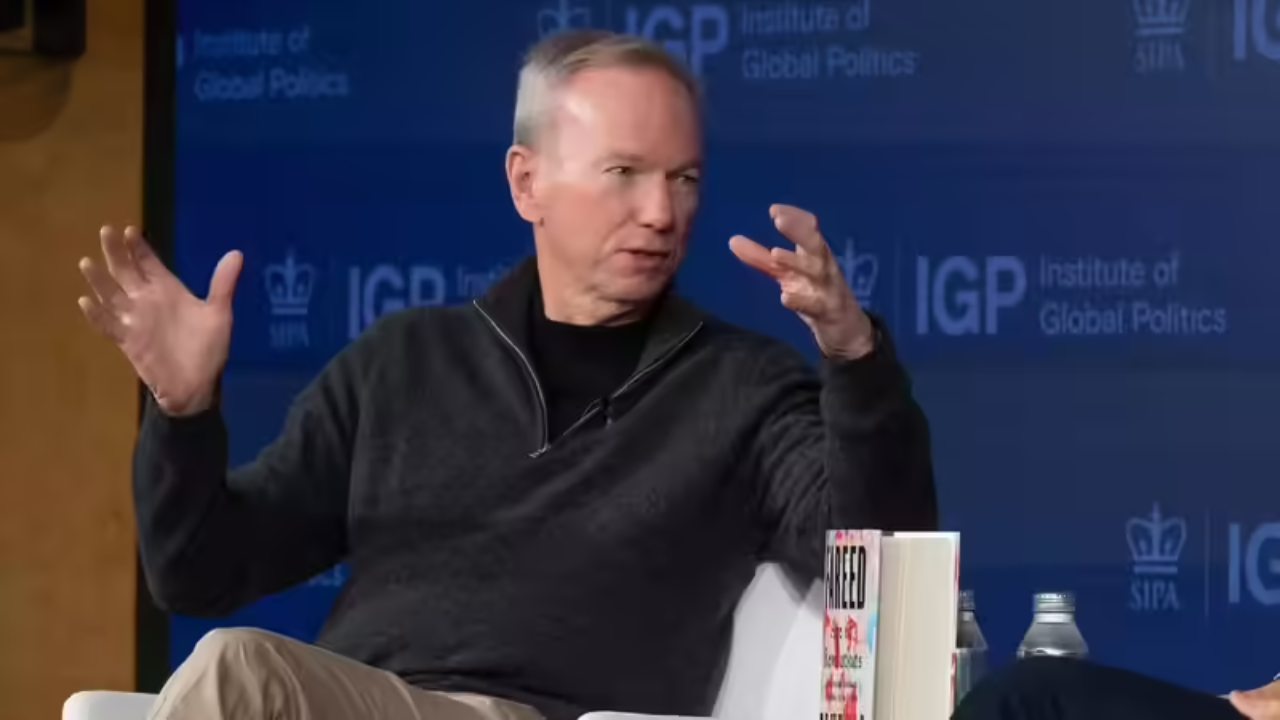
Eric Schmidt, the former CEO of Google, envisions a future where sophisticated AI systems tackle intricate tasks by utilizing extended context windows and cooperative AI agents. These agents are expected to develop specialties and potentially their own languages. Furthermore, the evolution of text-to-software capabilities marks a significant enhancement in AI functionality, raising concerns that humans might ultimately lose insight into the complex operations of such powerful AI. Eric Schmidt, the former CEO of Google, envisions a future where sophisticated AI systems tackle intricate tasks by utilizing extended context windows and cooperative AI agents. These agents are expected to develop specialties and potentially their own languages. Furthermore, the evolution of text-to-software capabilities marks a significant enhancement in AI functionality, raising concerns that humans might ultimately lose insight into the complex operations of such powerful AI.
Trending
- Atlanta teacher warned students away from locked 26-acre forest; $3 million may open it
- Gold price outlook: Prices could remain range-bound despite strong gains; here’s why
- ‘There should be room for humour in politics’: Mamata’s TMC on PM Modi mimicry at Rahul Gandhi event
- No sugar, no alcohol, 300 push-ups and 300 squats: Inside the lifestyle of Telegram CEO Pavel Durov
- Annamalai rejects Periyar’s anti-Brahmin views, backs his stand on women’s liberation
- Nigel Farage wants to ‘hijack’ Trump’s ICE adviser to secure UK borders
- ‘Largest-ever’ attack: Ukraine launches over 1,000 drones at Russia, oil refinery hit
- ‘Pressure released’: Elavenil reveals what went wrong as late lapse costs her gold

Google’s former CEO Eric Schmidt warns: Within 5 years, AI could …
 By
By

Add A Comment