
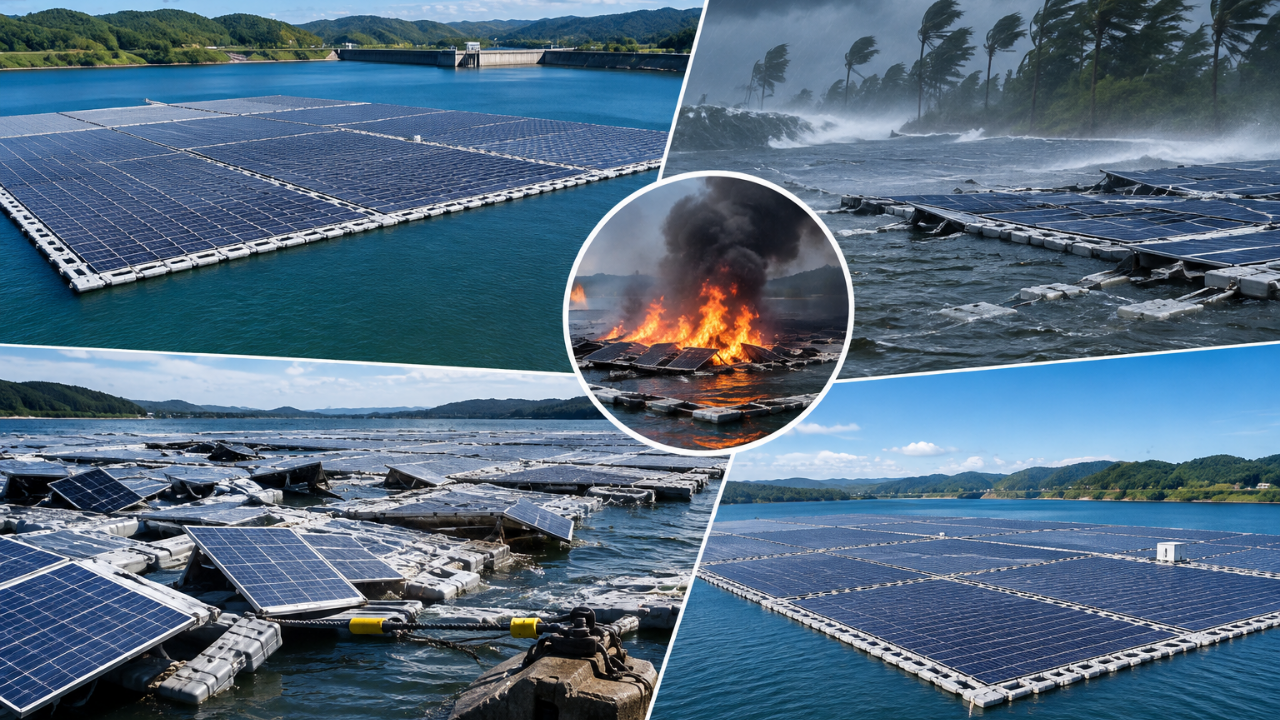
In 2019, a severe typhoon struck Japan’s largest floating solar farm, leaving it heavily damaged. This event highlighted the engineering flaws present in floating solar structures when confronted with extreme weather. Investigators identified anchor failures as the main factor contributing to the significant damage. In response, the project was restructured into smaller, more resilient floating modules. Now, it serves as a reference for enhancing solar technology’s storm resilience. In 2019, a severe typhoon struck Japan’s largest floating solar farm, leaving it heavily damaged. This event highlighted the engineering flaws present in floating solar structures when confronted with extreme weather. Investigators identified anchor failures as the main factor contributing to the significant damage. In response, the project was restructured into smaller, more resilient floating modules. Now, it serves as a reference for enhancing solar technology’s storm resilience.
Trending
- Moscow threatens ‘painful’ retaliation after Hungary expels 10 Russian diplomats
- SC to consider Satya Niketan case transfer from Delhi HC over PG building collapse
- TN Assembly passes resolution urging Centre to use official OBC names in 2027 Census
- New York is building a bridge with recycled glass: $21.2 million project to divert 106 tons of glass from landfills and prevent over 72 tons of CO2 emissions
- Why Harry and Meghan were caught off guard by King Charles’ latest letter
- Security scare at PM Modi’s Mumbai event: 1 carrying gun, other claiming to be PMO official detained
- Terror conspiracy case: NIA chargesheets US citizen, 6 Ukrainians for training anti-India forces
- The couple who saved The African Queen now own a £3.9m Scottish castle

Japan’s floating solar farm hit by 120mph typhoon; around 50 panels caught fire
 By
By

Add A Comment