
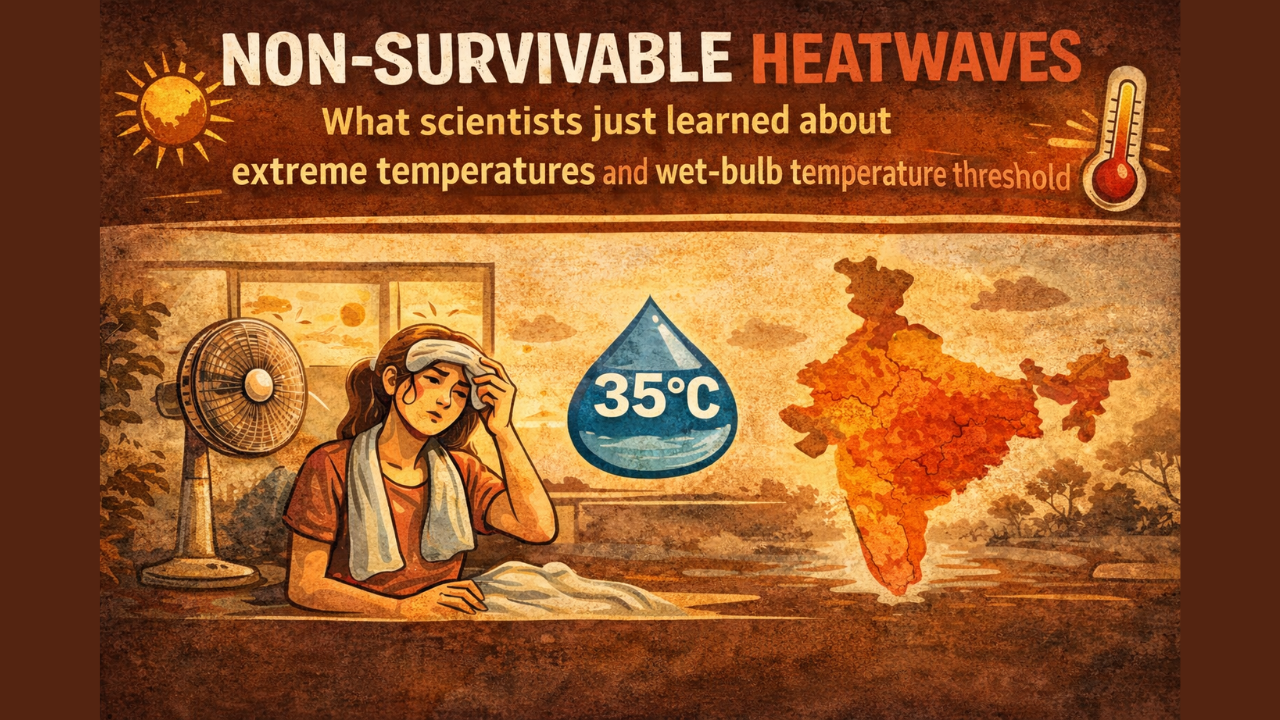
New research challenges the long-held 35°C wet-bulb temperature as the human survival limit. A physiology-based model suggests deadly heat stress can occur at cooler, drier conditions, even below this threshold. Older adults are particularly vulnerable, with lethal heat already impacting them during recent heatwaves, highlighting urgent reassessment of heat risk warnings. New research challenges the long-held 35°C wet-bulb temperature as the human survival limit. A physiology-based model suggests deadly heat stress can occur at cooler, drier conditions, even below this threshold. Older adults are particularly vulnerable, with lethal heat already impacting them during recent heatwaves, highlighting urgent reassessment of heat risk warnings.
Trending
- Kuwait’s Jazeera Airways cancels flights to 9 Indian cities until May 15, offers refund
- Kerala polls 2026: Nemom, Pala among 5 key constituencies as triangular fights intensify
- ‘Ships continuously coming even amid blockage’: Centre assures 100% energy supplies
- We are already in a World War—and it won’t end soon: Ray Dalio
- Remain indoors, avoid sensitive locations: India steps up safety measures for seafarers amid ongoing Iran war
- Bahrain Airport reopens: Flights resume after airspace shutdown as routes return across Gulf, India and Europe
- ‘Hyderabad powering India’s GCC growth’: Telangana IT minister at Mahindra University policy centre launch
- Sabarimala temple case: Centre backs curbs on women’s entry, says 2018 verdict assumed ‘men superior’

Non-survivable heatwaves: What scientists just learned about extreme temperatures
 By
By

Add A Comment